

- Your cart is empty
- Continue Shopping
Bhagavad Gita Updesh – Verse 2.52 : How to Removes Confusion and Brings True Wisdom

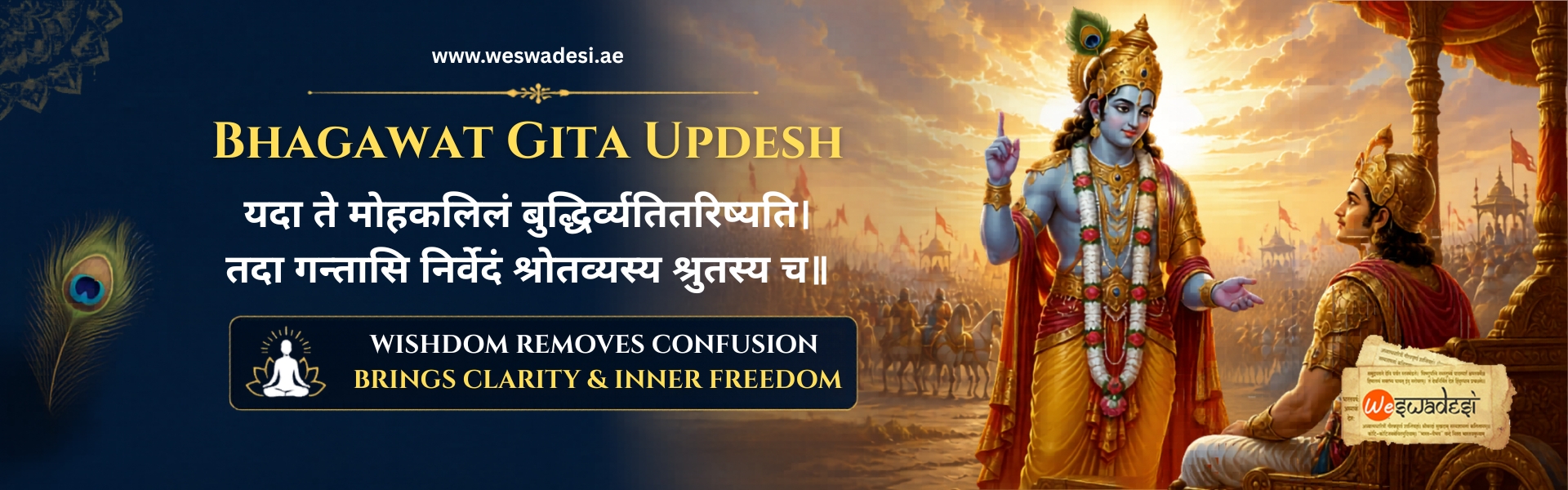
The teachings of the Bhagavad Gita continue to guide millions of people toward peace, clarity, and success in life. Among the most powerful teachings of the Gita is Verse 2.52, where Lord Krishna explains how wisdom removes confusion and helps a person move toward truth and stability.
In today’s world, people constantly struggle with stress, confusion, anxiety, comparison, and emotional imbalance. Many feel lost despite having education, money, and information. This is exactly where the Bhagavad Gita becomes relevant. The verse “Yada Te Moha Kalilam” teaches that real wisdom can clear mental confusion and help us make better decisions in life.
This Bhagavad Gita Updesh is not just a spiritual teaching. It is a practical life lesson that can transform relationships, career decisions, emotional health, and inner peace.
Sanskrit Shlok
यदा ते मोहकलिलं बुद्धिर्व्यतितरिष्यति।
तदा गन्तासि निर्वेदं श्रोतव्यस्य श्रुतस्य च॥
Transliteration
Yada Te Moha Kalilam Buddhir Vyatitarishyati
Tada Gantasi Nirvedam Shrotavyasya Shrutasya Cha
English Translation
When your intellect crosses beyond the dense forest of illusion and confusion, you shall become detached from all that has been heard and all that is yet to be heard.
Hindi Meaning
जब तुम्हारी बुद्धि मोह और भ्रम के घने जाल को पार कर जाएगी, तब तुम सुनी हुई और सुनने योग्य सभी बातों से विरक्त हो जाओगे।
जीवन के लिए संदेश – जब बुद्धि जागृत होती है, तब मन भ्रम से मुक्त हो जाता है। ज्ञान और विवेक ही जीवन में सही दिशा देते हैं।
Understanding the Deep Meaning of Bhagavad Gita Verse 2.52
This verse appears in Chapter 2 of the Bhagavad Gita, where Lord Krishna guides Arjuna during the battlefield of Kurukshetra. Arjuna was emotionally broken, confused, fearful, and unable to decide his duty.
Krishna explains that confusion is one of the biggest enemies of human life. When a person is trapped in attachment, fear, overthinking, or emotional weakness, the intellect loses clarity.
But wisdom changes everything.
Once the intellect becomes clear and stable, the person rises above confusion and gains inner freedom.
This is the essence of Bhagavad Gita Updesh.
What Does “Moha Kalilam” Mean?
The Sanskrit phrase “Moha Kalilam” has a very deep meaning.
Moha
Moha means attachment, illusion, emotional blindness, or confusion.
Kalilam
Kalilam means a dense forest, mud, or difficult entanglement.
Together, “Moha Kalilam” means:
“A deep forest of confusion and attachment where the mind loses direction.”
Today, many people live inside this mental forest without realizing it.
Examples include:
- Fear of failure
- Overthinking
- Emotional attachment
- Social comparison
- Negative thinking
- Anxiety about the future
- Constant need for approval
- Confusion in career or relationships
The Bhagavad Gita teaches that wisdom is the light that helps us come out of this darkness.
Why This Bhagavad Gita Updesh Is Important Today
Modern life is full of distractions.
People consume endless information from:
- Social media
- News channels
- Opinions
- Influencers
- Advertisements
- Online trends
Despite having access to information, people often feel mentally exhausted and emotionally confused.
This verse teaches an important truth:
Information is not equal to wisdom.
A wise person develops clarity, calmness, and discrimination.
That is why Bhagavad Gita Updesh remains timeless even today.
How Wisdom Removes Confusion
1. Wisdom Helps You See Reality Clearly
Confusion begins when emotions overpower intelligence.
For example:
- Anger hides truth
- Fear blocks decisions
- Attachment creates dependency
- Ego destroys understanding
Wisdom creates balance between emotions and logic.
A wise person does not react impulsively. They observe calmly and act correctly.
2. Wisdom Reduces Mental Stress
Most stress comes from uncertainty and overthinking.
When people lack clarity:
- They fear outcomes
- They worry constantly
- They become emotionally unstable
The Bhagavad Gita teaches that wisdom creates inner stability.
A calm mind performs better than a disturbed mind.
3. Wisdom Improves Decision-Making
Wrong decisions often come from confusion.
Wisdom helps people:
- Think clearly
- Analyze situations properly
- Avoid emotional mistakes
- Stay focused on long-term goals
This teaching is extremely useful for students, business owners, professionals, and families.
4. Wisdom Creates Emotional Independence
People suffer when happiness depends entirely on external situations.
True wisdom teaches:
- Self-control
- Inner peace
- Emotional maturity
- Detachment from negativity
This does not mean avoiding emotions. It means not becoming a slave to them.
Life Lessons from Bhagavad Gita Verse 2.52
Stop Overthinking
Overthinking weakens confidence and creates fear.
The Gita teaches that clarity comes through wisdom and calmness.
Focus on Truth, Not Noise
The world is full of opinions.
Wise people learn to focus on truth rather than mental distractions.
Build Inner Strength
External success is temporary if the mind is weak.
Inner strength helps people remain stable during difficult times.
Learn to Let Go
Attachment to outcomes creates suffering.
The Bhagavad Gita teaches balanced action without unhealthy attachment.
Develop Self-Awareness
A person who understands their own mind becomes powerful.
Self-awareness helps remove confusion and emotional instability.
Bhagavad Gita Updesh for Students
Students today face:
- Pressure
- Competition
- Anxiety
- Fear of failure
This verse teaches students to:
- Stay focused
- Avoid distractions
- Control stress
- Think positively
- Trust the learning process
A calm and focused mind learns faster than a stressed mind.
Bhagavad Gita Updesh for Working Professionals
Professionals often struggle with:
- Career confusion
- Job stress
- Office politics
- Work-life imbalance
This verse teaches:
- Clarity in decision-making
- Emotional intelligence
- Focus on duty
- Mental balance during pressure
Wisdom helps professionals stay productive without becoming mentally exhausted.
Bhagavad Gita Updesh for Relationships
Confusion damages relationships.
People often misunderstand:
- Intentions
- Expectations
- Emotions
Wisdom teaches:
- Patience
- Understanding
- Communication
- Emotional balance
Strong relationships require clarity and maturity.
Bhagavad Gita Updesh for Mental Peace
Mental peace is becoming rare today.
People constantly chase:
- Validation
- Attention
- Success
- Comparison
But peace comes from inner clarity, not external achievements.
This verse teaches us to calm the mind through wisdom and self-awareness.
Spiritual Meaning of This Verse
Spiritually, this verse teaches the journey from ignorance to enlightenment.
Confusion exists because people identify only with temporary things:
- Body
- Possessions
- Social identity
- Ego
Wisdom helps a person realize their deeper spiritual nature.
This realization creates freedom from fear and suffering.
How to Apply This Bhagavad Gita Updesh in Daily Life
Practice Silence Daily
Silence improves clarity.
Spend a few minutes daily away from distractions.
Read Spiritual Knowledge
Reading sacred teachings regularly improves understanding and emotional stability.
Observe Your Thoughts
Do not believe every thought immediately.
Observe thoughts calmly before reacting.
Avoid Toxic Negativity
Negative environments increase confusion.
Choose uplifting company and positive influences.
Meditate Regularly
Meditation improves concentration and emotional balance.
Focus on Your Duty
The Bhagavad Gita repeatedly teaches the importance of sincere action.
Focus on your responsibilities instead of worrying excessively about results.
Common Signs of Mental Confusion
You may be trapped in “Moha Kalilam” if you:
- Feel mentally exhausted constantly
- Overthink small decisions
- Fear the future excessively
- Depend too much on approval
- Feel emotionally unstable
- Compare yourself continuously
- Lack clarity in life goals
Recognizing confusion is the first step toward wisdom.
Difference Between Knowledge and Wisdom
| Knowledge | Wisdom |
|---|---|
| Collects information | Understands truth |
| Can increase ego | Creates humility |
| Focuses on facts | Focuses on right action |
| External learning | Internal understanding |
| Temporary | Transformational |
The Bhagavad Gita emphasizes wisdom over mere information.
Powerful Lessons from Lord Krishna’s Teaching
Clarity Is Power
A clear mind makes better decisions.
Peace Comes from Within
External success alone cannot create lasting peace.
Emotional Control Is Strength
Reacting emotionally weakens judgment.
Wisdom Leads to Freedom
A wise person is not controlled by fear, confusion, or social pressure.
Bhagavad Gita Updesh and Modern Psychology
Modern psychology also supports many teachings of the Bhagavad Gita.
Research shows:
- Overthinking increases anxiety
- Mindfulness improves clarity
- Emotional awareness improves relationships
- Meditation reduces stress
The wisdom of the Gita aligns beautifully with mental wellness practices.
Why Millions Still Follow the Bhagavad Gita
The Bhagavad Gita remains relevant because it addresses universal human struggles:
- Fear
- Doubt
- Anger
- Stress
- Attachment
- Purpose
- Inner peace
Its teachings are timeless because human emotions remain the same across generations.
Daily Affirmation Inspired by Verse 2.52
“I choose wisdom over confusion. My mind is calm, clear, and focused.”
Repeating positive affirmations strengthens mental clarity.
Short Inspirational Message from This Bhagavad Gita Updesh
When wisdom enters the mind, confusion disappears.
A calm intellect leads to right decisions, inner peace, and true happiness.
Best Practices to Gain Wisdom According to the Gita
Spend Time with Wise People
Good company influences thinking positively.
Avoid Excessive Distractions
Too much noise weakens concentration.
Develop Discipline
Discipline strengthens the mind.
Practice Gratitude
Gratitude reduces negativity and comparison.
Stay Connected to Spiritual Values
Spirituality creates emotional stability and meaning in life.
Internal Links Suggestions
- Read more Bhagavad Gita Updesh at:
Bhagavad Gita Updesh Collection - Related Article:
Bhagavad Gita Chapter 3 Verse 21 Explained - Related Article:
Bhagavad Gita Chapter 3 Verse 35 Explained
10 Frequently Asked Questions About Bhagavad Gita Verse 2.52
1. What is the meaning of Yada Te Moha Kalilam?
It means when wisdom removes confusion and illusion from the mind.
2. Who spoke this verse in the Bhagavad Gita?
Lord Krishna spoke this verse to Arjuna.
3. What does Moha mean?
Moha means attachment, illusion, confusion, or emotional ignorance.
4. Why is this verse important today?
It helps people deal with stress, confusion, anxiety, and emotional instability.
5. How can wisdom remove confusion?
Wisdom improves clarity, emotional balance, and right understanding.
6. Which chapter contains this verse?
This verse is from Chapter 2 of the Bhagavad Gita.
7. Can Bhagavad Gita teachings help mental health?
Yes, the teachings promote calmness, clarity, self-awareness, and emotional stability.
8. Is this verse useful for students?
Yes, it teaches focus, confidence, and stress management.
9. What is the central message of this Bhagavad Gita Updesh?
True wisdom frees the mind from confusion and suffering.
10. How can I apply this teaching daily?
Practice meditation, self-awareness, positive thinking, and calm decision-making.
Final Thoughts
The Bhagavad Gita is not only a spiritual scripture but also a complete guide for practical living. Verse 2.52 teaches one of the most important truths of life: confusion disappears when wisdom awakens.
Today, people are surrounded by information but starving for clarity. This Bhagavad Gita Updesh reminds us that peace, stability, and right understanding come from inner wisdom, not external noise.
When the intellect becomes free from illusion, fear, and emotional confusion, life becomes clearer, calmer, and more meaningful.
The teaching of “Yada Te Moha Kalilam” is a timeless reminder that true wisdom is the path to freedom, peace, and purposeful living.
