

- Your cart is empty
- Continue Shopping
Bhagavad Gita Updesh: 6:16 – The Powerful Secret of Balance in Life

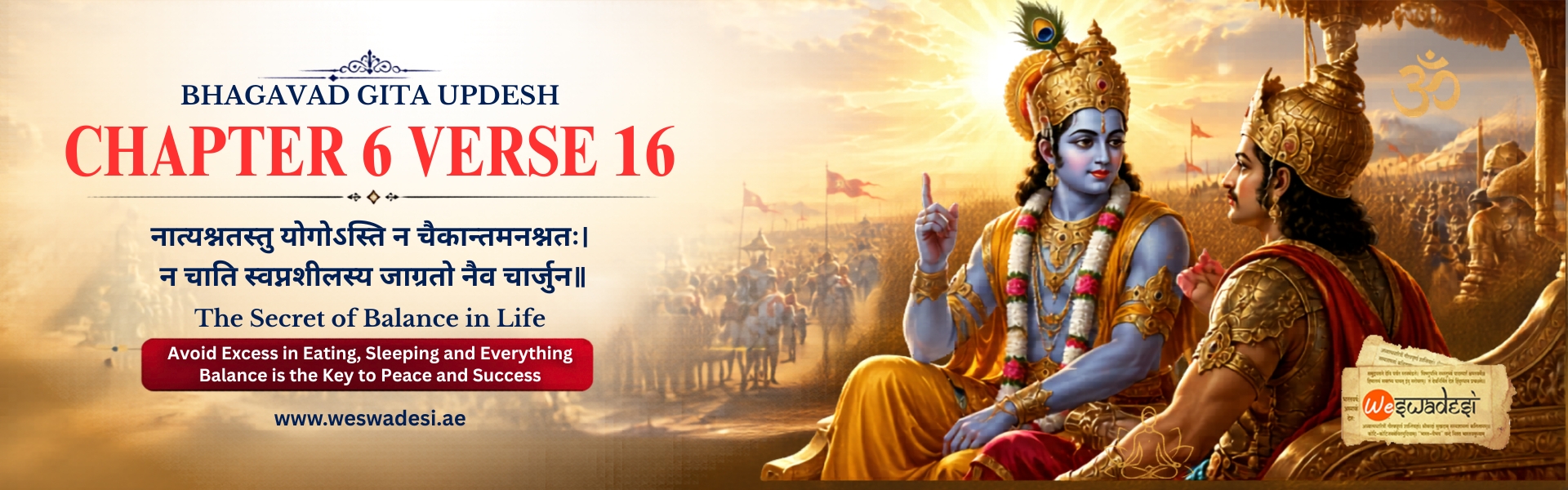
The teachings of the Bhagavad Gita are timeless. Even after thousands of years, the wisdom shared by Lord Krishna continues to guide people toward peace, happiness, success, and spiritual growth. One of the most practical and life-changing teachings comes from Bhagavad Gita Chapter 6 Verse 16.
This powerful Bhagavad Gita Updesh explains why balance is necessary in every part of life. In today’s fast-moving world, people often suffer from stress, anxiety, unhealthy lifestyles, burnout, emotional imbalance, and lack of peace. Many people work too much, sleep too little, eat unhealthy food, or become trapped in extreme habits.
Lord Krishna gives a simple but powerful solution: avoid excess in everything.
This teaching is not only spiritual wisdom but also practical life guidance for students, professionals, business owners, parents, leaders, and anyone seeking a peaceful and meaningful life.
In this detailed blog, you will discover:
- Complete Sanskrit shloka
- Word-by-word meaning
- Simple English explanation
- Spiritual lessons
- Scientific relevance
- Importance of moderation
- Practical daily life applications
- Benefits of balanced living
- Lessons for modern life
- FAQs on Bhagavad Gita Chapter 6 Verse 16
Let us deeply understand this life-transforming Bhagavad Gita Updesh.
Bhagavad Gita Chapter 6 Verse 16
Sanskrit Shloka
नात्यश्नतस्तु योगोऽस्ति न चैकान्तमनश्नतः।
न चाति स्वप्नशीलस्य जाग्रतो नैव चार्जुन॥
Transliteration
Nātyaśnatas tu yogo ’sti na caikāntam anaśnataḥ
Na cāti-svapna-śīlasya jāgrato naiva cārjuna
Simple English Meaning
Lord Krishna says:
“O Arjuna, yoga is not possible for one who eats too much or too little, sleeps too much or too little.”
The message is very clear:
A balanced lifestyle is essential for physical health, mental peace, emotional stability, and spiritual growth.
Hindi Meaning
हे अर्जुन! जो व्यक्ति बहुत अधिक खाता है या बिल्कुल नहीं खाता, बहुत अधिक सोता है या बहुत अधिक जागता रहता है, उसके लिए योग संभव नहीं है।
जीवन में संतुलन और संयम अत्यंत आवश्यक हैं।
Why This Bhagavad Gita Updesh Is So Important Today
Modern life is full of extremes.
Some people:
- Work without rest
- Sleep very late
- Eat unhealthy food
- Follow extreme diets
- Spend too much time on mobile phones
- Overthink constantly
- Ignore mental health
- Chase success without peace
As a result:
- Stress increases
- Relationships suffer
- Health problems rise
- Happiness decreases
- Inner peace disappears
Bhagavad Gita Chapter 6 Verse 16 directly addresses these modern problems.
Lord Krishna teaches moderation, discipline, and balance — the real foundation of a successful and peaceful life.
The Deep Meaning Behind “Avoid Excess”
This Bhagavad Gita Updesh is not only about food and sleep. It applies to every area of life.
Excess Eating
Eating too much leads to:
- Laziness
- Obesity
- Diseases
- Mental dullness
- Lack of focus
Today many lifestyle diseases are connected to overeating and unhealthy eating habits.
Extreme Fasting
Lord Krishna also warns against excessive fasting or starvation.
Many people believe spirituality means punishing the body. But the Gita teaches balance, not torture.
The body is a temple and must be cared for properly.
Excess Sleeping
Too much sleep can create:
- Laziness
- Lack of motivation
- Depression
- Slow thinking
Too Little Sleep
Lack of sleep causes:
- Stress
- Anger
- Poor concentration
- Anxiety
- Weak immunity
This is why Lord Krishna emphasizes moderation.
Bhagavad Gita Updesh and the Science of Balanced Living
Modern science now confirms what the Bhagavad Gita taught thousands of years ago.
Healthy Eating Improves Mental Health
Research shows balanced nutrition improves:
- Brain function
- Mood
- Energy levels
- Emotional stability
Proper Sleep Supports Peaceful Living
Sleep experts recommend proper rest for:
- Memory
- Mental clarity
- Emotional health
- Productivity
Work-Life Balance Prevents Burnout
Many professionals today experience burnout because they live in extremes.
The Bhagavad Gita teaches sustainable living instead of exhausting ambition.
The Connection Between Balance and Yoga
In this verse, Lord Krishna says yoga is not possible without moderation.
But what does yoga really mean?
Yoga does not only mean physical exercise.
Yoga means:
- Union with the higher self
- Inner peace
- Mental stability
- Spiritual connection
- Harmony in life
An imbalanced lifestyle disturbs the mind. A disturbed mind cannot experience peace or meditation.
Therefore balance becomes the first step toward yoga.
How Bhagavad Gita Updesh Helps Students
Students today face enormous pressure.
They often:
- Study excessively
- Sleep less
- Eat poorly
- Experience anxiety
This verse teaches students:
- Study with discipline
- Take proper rest
- Eat healthy food
- Avoid distractions
- Maintain emotional balance
Balanced students perform better academically and mentally.
Lessons for Working Professionals
Corporate life often pushes people toward unhealthy lifestyles.
People work:
- Long hours
- Without rest
- Under stress
- Without family time
This Bhagavad Gita Updesh teaches professionals:
- Productivity is important
- But peace is equally important
- Success without health is meaningless
Balanced professionals become:
- Better leaders
- Better decision-makers
- Happier individuals
Lessons for Business Owners and Entrepreneurs
Entrepreneurs often sacrifice:
- Sleep
- Health
- Family life
- Peace of mind
Lord Krishna’s wisdom reminds entrepreneurs:
- Long-term success needs stability
- Mental clarity comes from balance
- Sustainable growth is better than self-destruction
A peaceful mind makes better business decisions.
Spiritual Meaning of Bhagavad Gita Chapter 6 Verse 16
Spiritually, this verse teaches self-discipline.
Self-discipline means:
- Not becoming a slave to desires
- Avoiding addictions
- Maintaining control over habits
- Living consciously
Spiritual growth does not come through extremes.
It comes through awareness and balance.
The Middle Path: A Universal Truth
The Bhagavad Gita’s teaching of moderation is similar to the idea of the “middle path” found in many spiritual traditions.
The message is universal:
- Avoid extremes
- Live mindfully
- Practice discipline
- Stay balanced
Balance creates harmony in life.
Common Areas Where People Need Balance
Food
Eat nutritious meals in moderation.
Work
Work sincerely but avoid burnout.
Technology
Use technology wisely without addiction.
Social Media
Avoid excessive scrolling and comparison.
Emotions
Do not react excessively to success or failure.
Money
Earn honestly but do not become greedy.
Relationships
Give time and care without becoming emotionally dependent.
Spiritual Practice
Practice spirituality naturally without fanaticism.
Signs Your Life Is Out of Balance
You may need balance if you experience:
- Constant stress
- Poor sleep
- Irritability
- Fatigue
- Anxiety
- Lack of focus
- Emotional instability
- Health problems
- Lack of peace
Bhagavad Gita Updesh teaches that balance restores harmony.
Practical Ways to Apply This Bhagavad Gita Updesh
Create a Healthy Routine
Wake up and sleep at regular times.
Eat Mindfully
Avoid overeating and unhealthy food.
Exercise Regularly
Physical movement improves physical and mental health.
Practice Meditation
Meditation calms the mind and increases awareness.
Reduce Digital Addiction
Limit unnecessary screen time.
Spend Time with Family
Healthy relationships create emotional stability.
Take Proper Rest
Rest is not laziness; it is necessary for recovery.
Practice Gratitude
Gratitude creates emotional peace.
The Hidden Power of Discipline
Many people think discipline restricts freedom.
Actually discipline creates freedom.
Without discipline:
- Habits control us
- Emotions control us
- Desires control us
With discipline:
- We gain clarity
- We gain strength
- We gain peace
This is one of the deepest lessons of Bhagavad Gita Chapter 6 Verse 16.
Bhagavad Gita Updesh for Mental Peace
Mental peace is one of the biggest challenges today.
People have:
- More technology
- More entertainment
- More comfort
Yet anxiety and stress continue increasing.
Why?
Because peace does not come from external things.
Peace comes from inner balance.
Lord Krishna’s teaching helps create:
- Emotional stability
- Calmness
- Clarity
- Peaceful thinking
Why Extremes Create Suffering
Extreme lifestyles create instability.
Examples:
- Extreme work causes burnout
- Extreme emotions create conflict
- Extreme attachment creates pain
- Extreme desires create dissatisfaction
Balance creates sustainability and peace.
How This Verse Improves Relationships
Balanced people communicate better.
They:
- Listen calmly
- Avoid emotional overreaction
- Respect others
- Manage anger wisely
As a result, relationships improve.
Bhagavad Gita Updesh and Emotional Intelligence
This verse also teaches emotional intelligence.
Emotionally intelligent people:
- Control reactions
- Think clearly
- Stay calm under pressure
- Avoid impulsive behavior
Balanced living strengthens emotional intelligence.
Importance of Moderation in Success
Many people believe nonstop work guarantees success.
But real success requires:
- Health
- Peace
- Relationships
- Emotional strength
- Clear thinking
Balanced people sustain success longer.
Daily Routine Inspired by Bhagavad Gita Chapter 6 Verse 16
Here is a simple balanced routine inspired by this Bhagavad Gita Updesh.
Morning
- Wake up early
- Practice gratitude
- Exercise or yoga
- Eat healthy breakfast
Daytime
- Work with focus
- Take short breaks
- Drink enough water
- Avoid stress overload
Evening
- Spend time with family
- Reduce screen time
- Eat light dinner
Night
- Meditate or pray
- Sleep on time
Small balanced habits create a peaceful life.
The Role of Self-Control
Self-control is essential for balance.
Without self-control:
- Desires become unlimited
- Addictions increase
- Peace disappears
The Bhagavad Gita teaches mastery over the mind.
What Happens When Life Becomes Balanced
Balanced living improves:
- Physical health
- Mental peace
- Productivity
- Relationships
- Focus
- Spiritual awareness
- Happiness
This is why this Bhagavad Gita Updesh remains timeless.
Leadership Lessons from Bhagavad Gita Chapter 6 Verse 16
Great leaders understand balance.
They know:
- Rest improves performance
- Calm thinking improves decisions
- Emotional balance improves leadership
Balanced leaders inspire trust and confidence.
Parenting Lessons from This Bhagavad Gita Updesh
Parents can teach children:
- Healthy routines
- Emotional control
- Balanced habits
- Discipline
- Mindful technology use
These lessons build strong character.
How Social Media Creates Imbalance
Modern digital life encourages excess:
- Endless scrolling
- Constant comparison
- Mental distraction
The Bhagavad Gita teaches conscious living instead of compulsive behavior.
Minimalism and Bhagavad Gita Wisdom
Modern minimalism teaches:
- Simplicity
- Mindful consumption
- Intentional living
This aligns beautifully with Bhagavad Gita teachings on moderation.
Spiritual Growth Requires Stability
A restless and unhealthy lifestyle disturbs meditation and spiritual practice.
Balanced living helps:
- Concentration
- Awareness
- Inner calmness
- Spiritual understanding
This is why Lord Krishna connects moderation with yoga.
Common Misunderstandings About Spirituality
Some people think spirituality means:
- Extreme fasting
- Isolation
- Rejecting all comforts
But the Bhagavad Gita teaches practical spirituality.
Spirituality means:
- Awareness
- Discipline
- Balance
- Peaceful living
Life Lessons from Bhagavad Gita Chapter 6 Verse 16
Balance is strength
Discipline creates freedom
Peace comes from moderation
Health is necessary for spiritual growth
Extremes create suffering
Self-control creates stability
These timeless lessons apply to everyone.
Inspirational Quotes Inspired by This Bhagavad Gita Updesh
“Balance is the foundation of peace.”
“Discipline is the bridge between goals and inner happiness.”
“A balanced mind creates a successful life.”
“Moderation is not weakness; it is wisdom.”
“Peace begins when excess ends.”
How to Start Living a Balanced Life Today
Start with small changes:
- Sleep on time
- Eat healthy food
- Reduce negativity
- Practice mindfulness
- Spend time in silence
- Avoid overworking
- Limit distractions
Consistency matters more than perfection.
Why This Bhagavad Gita Updesh Is Eternal
Human problems may change in appearance, but the root causes remain similar:
- Desire
- Imbalance
- Stress
- Lack of control
The Bhagavad Gita provides timeless solutions.
That is why millions of people continue reading Bhagavad Gita Updesh for guidance and peace.
Conclusion
Bhagavad Gita Chapter 6 Verse 16 is one of the most practical teachings for modern life.
Lord Krishna teaches that:
- Excess destroys peace
- Balance creates harmony
- Discipline supports growth
- Moderation leads to stability
Whether you are a student, professional, entrepreneur, parent, or spiritual seeker, this Bhagavad Gita Updesh can transform your life.
A balanced life is not boring.
It is powerful, peaceful, healthy, and sustainable.
When we avoid extremes and live with awareness, life becomes calmer, clearer, and more meaningful.
The timeless wisdom of Bhagavad Gita continues guiding humanity toward a better life — one balanced step at a time.
FAQs on Bhagavad Gita Chapter 6 Verse 16
1. What is the meaning of Bhagavad Gita Chapter 6 Verse 16?
It teaches that excessive eating, sleeping, or extreme habits prevent peace, discipline, and spiritual growth. Balance is essential for a successful life.
2. What does Lord Krishna teach in Verse 6.16?
Lord Krishna teaches moderation and balanced living for achieving mental peace and yoga.
3. Why is balance important according to Bhagavad Gita?
Balance keeps the body healthy, mind peaceful, and emotions stable, helping a person live wisely.
4. How is this verse relevant in modern life?
Modern lifestyles are often stressful and extreme. This verse teaches healthy routines and emotional balance.
5. Does this verse only talk about food and sleep?
No. It also applies to work, emotions, technology, desires, and daily habits.
6. What is the connection between moderation and yoga?
A calm and disciplined lifestyle supports concentration, meditation, and spiritual growth.
7. How can students apply this Bhagavad Gita Updesh?
Students should maintain healthy study routines, proper sleep, balanced eating, and emotional stability.
8. What are the benefits of balanced living?
Balanced living improves health, focus, peace, relationships, and productivity.
9. Can this verse help reduce stress?
Yes. Moderation and discipline reduce mental pressure and create emotional peace.
10. What is the biggest lesson from Bhagavad Gita Chapter 6 Verse 16?
The biggest lesson is that peace and success come through balance, not extremes.
- Bhagavad Gita Updesh Chapter 2 Verse 47
- Bhagavad Gita Updesh Chapter 3 Verse 21
- Bhagavad Gita Updesh Chapter 3 Verse 35
- Bhagavad Gita Updesh Chapter 2 Verse 52
- Bhagavad Gita Updesh on Self Discipline
- Bhagavad Gita Teachings for Peaceful Life
Suggested Internal Links
