

- Your cart is empty
- Continue Shopping
Jaki Rahi Bhavana Jaisi – The Deep Meaning Behind This Powerful Ramayan Verse

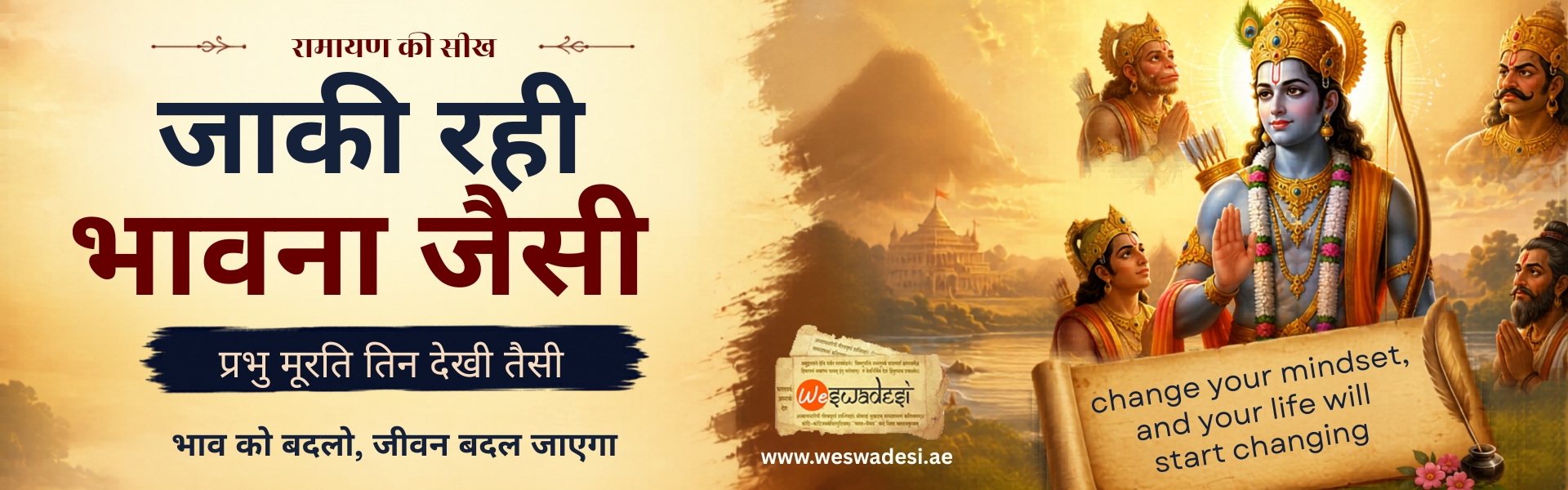
This beautiful line from the sacred Ramcharitmanas is one of the most meaningful and life-changing teachings found in Indian spirituality. Millions of devotees repeat this verse daily because it explains a deep truth about human perception, devotion, emotions, and spiritual experience.
The simple meaning of “जाकी रही भावना जैसी प्रभु मूरति तिन देखी तैसी” is:
“As a person’s feelings and devotion are, they perceive God in the same way.”
This teaching from Ramcharitmanas reveals that our inner emotions shape our outer experiences. The world, people, relationships, and even God appear according to our mindset, faith, and intentions.
In today’s stressful world filled with negativity, comparison, anger, and confusion, this one verse offers powerful guidance for peace, devotion, relationships, and self-growth. Whether you are spiritual, religious, or simply searching for clarity in life, the wisdom behind “जाकी रही भावना जैसी” can transform the way you think and live.
जाकी रही भावना जैसी, प्रभु मूरति तिन देखी तैसी॥
Meaning of “जाकी रही भावना जैसी”
Let us understand the verse word by word.
- जाकी = Whose
- रही = Exists
- भावना = Feelings, emotions, intentions, devotion
- जैसी = Whatever kind
- प्रभु = God
- मूरति = Form or appearance
- तिन = To them
- देखी = Seen
- तैसी = In the same way
Simple English Meaning
A person sees God according to the feelings present in their heart.
Deep Spiritual Meaning
This verse teaches that our perception is shaped by our inner consciousness. Two people may look at the same situation but experience it differently because their mindset and emotions differ.
A devotee sees compassion in God.
A warrior sees strength in God.
A seeker sees wisdom in God.
A negative person may fail to recognize divinity altogether.
The verse beautifully explains that reality is influenced by inner feelings.
Where Does This Verse Appear in Ramayan?
This famous line appears in Ramcharitmanas written by Goswami Tulsidas.
The context is deeply spiritual. Different people witnessed Lord Ram differently depending on their emotions, purity, devotion, ego, and understanding.
- Saints saw divinity.
- Devotees saw God.
- Enemies saw an ordinary prince.
- Wise sages saw the Supreme Truth.
This shows that truth remains the same, but perception changes according to inner consciousness.
Why This Verse Is So Popular Even Today
The reason “जाकी रही भावना जैसी” remains popular after centuries is because it applies perfectly to modern life.
People today face:
- Stress
- Anxiety
- Anger
- Broken relationships
- Negative thinking
- Social comparison
- Emotional instability
This verse reminds us that our inner state creates our experience of life.
If the mind is peaceful, the world feels beautiful.
If the mind is angry, everything feels irritating.
If the heart is pure, goodness becomes visible everywhere.
That is why this line from Ramayan feels timeless.
The Psychological Truth Hidden in This Verse
Modern psychology also supports this wisdom.
Human beings do not see reality exactly as it is. They see reality through:
- Beliefs
- Emotions
- Past experiences
- Expectations
- Mental conditioning
For example:
- A positive person sees opportunity in difficulty.
- A fearful person sees danger everywhere.
- A loving person sees kindness in others.
- A jealous person finds faults in everyone.
This is exactly what “जाकी रही भावना जैसी” teaches.
Spiritual Lesson from Lord Ram
Lord Rama is considered Maryada Purushottam — the ideal human being.
People connected with Lord Ram differently:
- Hanuman saw his beloved Lord.
- Bharat saw his life and soul.
- Ravana saw an enemy.
- Saints saw the Supreme God.
- Ordinary citizens saw a noble king.
Lord Ram did not change.
The feelings of people changed.
This is the essence of the verse.
Hanuman Ji and Pure Devotion
Hanuman is the greatest example of pure devotion.
Hanuman Ji saw nothing except Lord Ram everywhere. His heart was completely filled with love, surrender, and faith.
Because of his pure भावना (emotion and devotion), he experienced the highest spiritual connection.
This teaches us:
- Pure intention attracts divine grace.
- Selfless devotion creates inner strength.
- Faith transforms ordinary life into spiritual life.
Ravana’s Perspective: Ego Changes Vision
Ravana was highly intelligent and powerful, yet he could not recognize the divinity of Lord Ram.
Why?
Because ego and arrogance blocked his perception.
This is another hidden lesson behind “जाकी रही भावना जैसी”.
When the heart is filled with:
- Ego
- Anger
- Jealousy
- Pride
- Hatred
Even truth becomes invisible.
Life Lessons We Can Learn from This Verse
1. Your Mindset Shapes Your World
People often blame the world for negativity, but the verse reminds us that inner emotions influence outer experiences.
Positive thinking creates:
- Better relationships
- Better opportunities
- Better emotional health
- Better spiritual growth
2. See Goodness in Others
If we constantly search for faults, we will only find negativity.
But when we approach others with understanding and compassion, relationships improve naturally.
This teaching is extremely relevant for:
- Marriage
- Family life
- Friendships
- Workplace culture
3. Faith Changes Life
People with faith experience hope even during difficult times.
Faith does not mean ignoring problems. It means believing that challenges can be overcome.
4. Control Your Inner Emotions
Your inner feelings become your outer reality.
That is why spiritual traditions emphasize:
- Meditation
- Prayer
- Gratitude
- Positive company
- Good thoughts
How This Verse Helps in Daily Life
During Stress
When stress increases, people start seeing negativity everywhere.
This verse reminds us to calm the mind first.
During Conflicts
Instead of reacting with anger, try understanding the other person’s perspective.
During Spiritual Practice
Devotion becomes meaningful when emotions are genuine.
During Difficult Situations
Your attitude determines whether difficulty becomes suffering or growth.
Modern Examples of “जाकी रही भावना जैसी”
Example 1: Workplace
Two employees receive criticism.
- One sees it as humiliation.
- Another sees it as an opportunity to improve.
Same situation.
Different भावना.
Example 2: Social Media
Some people use social media for learning and inspiration.
Others experience jealousy and negativity.
Again, the platform is the same.
The mindset changes the experience.
Example 3: Relationships
A loving person notices care and affection.
An insecure person notices rejection and doubt.
This is the power of perception.
Connection Between Karma and Emotion
Indian spirituality teaches that actions alone are not enough. Intention also matters.
Helping someone for fame is different from helping someone with compassion.
The emotional quality behind actions shapes spiritual growth.
That is why भावना is considered sacred.
The Power of Bhavana in Bhakti
In Bhakti Yoga, devotion is not measured by rituals alone.
True devotion depends on:
- Purity of heart
- Sincerity
- Love
- Humility
- Emotional connection with God
Even a small offering made with love becomes spiritually powerful.
What Saints Say About This Verse
Many saints and spiritual teachers explain that God reflects the heart of the devotee.
- A fearful person sees punishment.
- A loving devotee experiences compassion.
- A wise seeker experiences truth.
This explains why spiritual experiences differ from person to person.
Relevance in Today’s Society
Today society struggles with:
- Mental stress
- Polarization
- Social comparison
- Emotional instability
- Lack of patience
This one verse encourages emotional purification.
Instead of changing the whole world, begin by improving:
- Thoughts
- Intentions
- Emotional reactions
- Perspective
Gradually life itself changes.
The Science of Positive Perception
Modern neuroscience suggests that the brain filters reality according to repeated thought patterns.
People repeatedly focusing on negativity train the brain to notice problems.
People practicing gratitude train the brain to notice positivity.
This scientific understanding beautifully aligns with:
“जाकी रही भावना जैसी।”
Importance of Emotional Purity
Spiritual traditions emphasize purity of emotions because emotions influence:
- Decisions
- Relationships
- Mental peace
- Spiritual experience
A pure heart experiences deeper joy than material success alone can provide.
Lessons for Students
Students can learn powerful values from this verse:
- Positive thinking improves confidence.
- Good intentions improve focus.
- Respect for teachers enhances learning.
- Calm emotions improve decision-making.
Lessons for Families
Families become stronger when members choose:
- Understanding over judgment
- Patience over anger
- Love over ego
The atmosphere of a home reflects collective emotions.
Lessons for Business and Leadership
Great leaders understand emotions deeply.
Successful leadership requires:
- Empathy
- Positive vision
- Integrity
- Emotional intelligence
People trust leaders who genuinely care.
Why Devotees Love This Verse
Devotees connect emotionally with this line because it feels personally true.
Every devotee experiences God differently:
- As a protector
- As a friend
- As a guide
- As a parent
- As pure love
This emotional connection creates deep spiritual comfort.
Spiritual Interpretation of “प्रभु मूरति”
“प्रभु मूरति” does not only mean physical appearance.
It also represents:
- Divine experience
- Spiritual understanding
- Inner realization
- Personal connection with God
Each soul experiences divinity differently.
Hidden Message About Human Relationships
This verse applies not only to God but also to human interactions.
When we carry suspicion, relationships become difficult.
When we carry trust, relationships become healthier.
Our emotional lens changes how we interpret people’s behavior.
Can Negative Emotions Be Changed?
Yes.
Indian spiritual traditions suggest:
- Satsang
- Prayer
- Meditation
- Good company
- Reading scriptures
- Gratitude practice
- Self-reflection
These gradually purify emotions and thinking.
Practical Ways to Apply This Teaching
Start the Day with Positive Thoughts
Morning emotions influence the entire day.
Practice Gratitude
Focus on blessings instead of constant complaints.
Avoid Negative Company
Surround yourself with uplifting people.
Read Spiritual Literature
Texts like Ramcharitmanas help create positive consciousness.
Speak Kindly
Words affect both the speaker and the listener.
Emotional Healing Through Devotion
Bhakti and devotion help many people overcome:
- Loneliness
- Fear
- Anxiety
- Emotional pain
Faith creates emotional resilience and inner peace.
Why Ramayan Still Matters Today
Ramayana continues to inspire people because it addresses timeless human emotions:
- Love
- Duty
- Sacrifice
- Ego
- Faith
- Devotion
- Dharma
The teachings remain deeply relevant in modern life.
The Universal Truth Behind This Verse
Even outside spirituality, this teaching applies universally.
People experience life according to:
- Expectations
- Beliefs
- Attitude
- Emotional conditioning
Therefore, improving inner consciousness improves outer experience.
Difference Between Knowledge and Realization
Many people read spiritual texts.
Few truly live them.
Real spiritual growth happens when teachings influence daily behavior.
“जाकी रही भावना जैसी” becomes transformative when practiced, not merely quoted.
The Role of Intention in Spirituality
Spirituality is not about external display.
It is about internal sincerity.
Even simple prayer becomes powerful when filled with genuine emotion.
Emotional Energy and Environment
Human emotions influence environments strongly.
A peaceful person spreads calmness.
An angry person spreads tension.
Homes, workplaces, and communities absorb emotional energy.
How Children Learn Emotions
Children naturally absorb emotions from parents and surroundings.
A home filled with:
- Respect
- Devotion
- Gratitude
- Patience
Creates emotionally balanced children.
The Verse and Mental Peace
Mental peace comes when perception becomes balanced.
This verse encourages:
- Compassion
- Acceptance
- Positive thinking
- Spiritual awareness
These qualities reduce inner conflict.
Why Inner Transformation Matters More Than Outer Success
Modern life often focuses only on:
- Wealth
- Status
- Competition
- Achievement
But without emotional balance, success may still feel empty.
Inner peace creates lasting happiness.
The Divine Mirror Principle
Many spiritual teachers describe God as a mirror.
The heart reflects back what it carries.
- Love experiences love.
- Fear experiences fear.
- Ego experiences conflict.
- Devotion experiences grace.
This is the essence of “जाकी रही भावना जैसी।”
Frequently Misunderstood Meaning
Some people think the verse means imagination creates reality completely.
That is not the true meaning.
The verse teaches:
Your emotional state influences how you experience reality.
It is about perception, consciousness, and spiritual connection.
Importance of Satsang
Spiritual company helps purify emotions.
Listening to devotional songs, spiritual discourses, and Ramayan teachings helps create positive consciousness.
Role of Meditation
Meditation helps observe thoughts without becoming controlled by them.
A calm mind sees life more clearly.
Power of Faith During Difficult Times
Faith gives emotional strength during:
- Loss
- Failure
- Illness
- Uncertainty
- Fear
Devotion creates hope even in darkness.
The Message for Modern Youth
Young people today face immense mental pressure.
This verse reminds youth:
- Protect your mindset.
- Choose positive influences.
- Focus on inner growth.
- Build emotional strength.
- Develop spiritual awareness.
Ramayan’s Relevance in the Digital Age
Despite technology and modern lifestyles, human emotions remain the same.
That is why teachings from Ramayana continue guiding millions worldwide.
Conclusion
“जाकी रही भावना जैसी।
प्रभु मूरति तिन देखी तैसी॥”
This simple yet profound line from Ramcharitmanas teaches one of life’s greatest truths:
Your inner emotions shape your outer experience.
When the heart becomes pure, the world appears more beautiful.
When thoughts become peaceful, life feels lighter.
When devotion becomes sincere, God feels closer.
The verse encourages self-reflection, emotional awareness, positivity, and spiritual growth. In a world full of stress and negativity, this timeless wisdom from Ramayan offers clarity, peace, and hope.
Instead of trying to change everyone around us, we should begin by transforming our own thoughts, intentions, and emotions.
Because ultimately:
As the feeling within, so becomes the vision outside.
FAQs About “जाकी रही भावना जैसी”
1. What is the meaning of “जाकी रही भावना जैसी”?
It means people experience and perceive God according to their inner emotions, devotion, and mindset.
2. Which scripture contains this verse?
This verse appears in Ramcharitmanas written by Goswami Tulsidas.
3. What does भावना mean in this verse?
भावना means emotions, feelings, devotion, intention, and inner consciousness.
4. Why is this verse important?
It teaches that perception depends on inner emotional state and mindset.
5. How is this verse relevant today?
It helps people understand positivity, emotional balance, relationships, and mental peace.
6. Did everyone see Lord Ram differently?
Yes. Different people perceived Lord Rama according to their emotions and consciousness.
7. What lesson does this verse teach about relationships?
Healthy emotions create healthy relationships, while negativity damages them.
8. Can positive thinking change life experience?
Positive thinking improves perception, emotional health, confidence, and relationships.
9. How can I apply this teaching daily?
Practice gratitude, meditation, devotion, kindness, and positive thinking.
10. Why is this verse popular among devotees?
Because it beautifully explains the emotional connection between devotees and God.
