

- Your cart is empty
- Continue Shopping
What Is Low GI Sweetener? Complete Guide for Beginners

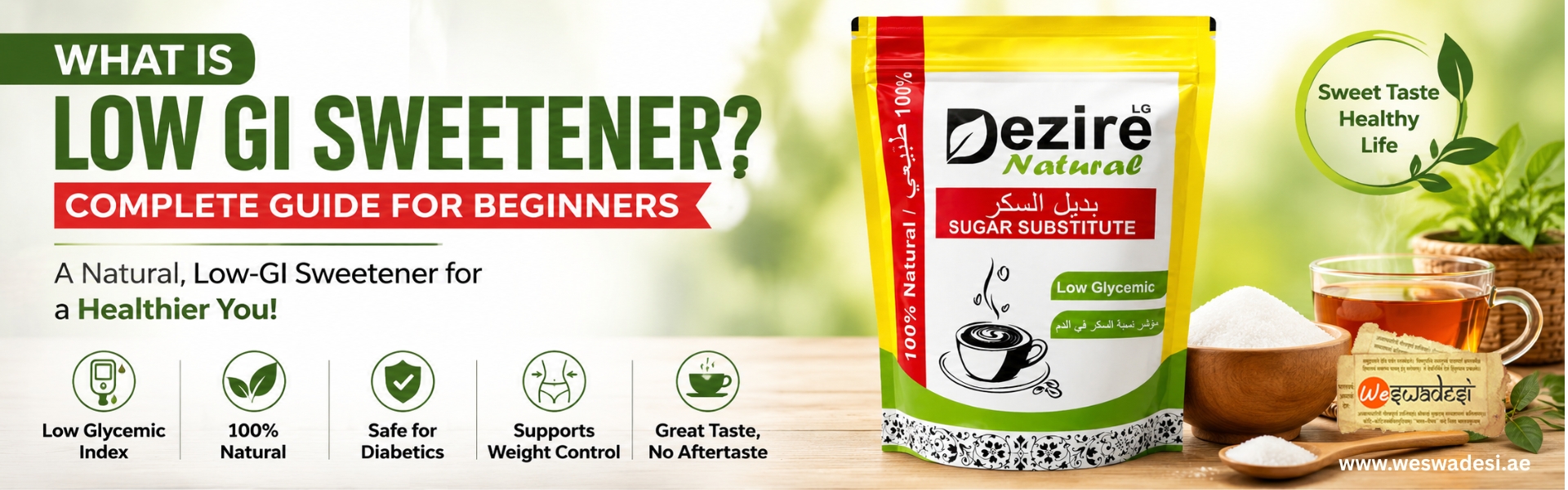
If you are trying to reduce your sugar intake, manage diabetes, lose weight, or live a healthier lifestyle, you may have heard about Low GI Sweeteners. But what exactly is a Low GI sweetener and why has it become one of the most trusted sugar alternatives worldwide? This complete beginner-friendly guide explains everything in clear and simple way.
A Low GI sweetener is a natural or plant-based sweetener that has a low Glycemic Index, meaning it does not cause a fast rise in blood sugar levels like regular sugar. This makes it ideal for diabetics, fitness enthusiasts, weight watchers, and anyone wanting stable energy and healthier eating habits. In this guide, you’ll learn what GI means, why Low GI matters, its benefits, how to use it, and how it compares to regular sugar.
What Does Low GI Actually Mean?
The Glycemic Index (GI) is a scientific scale from 0 to 100 that measures how quickly a food raises blood sugar after eating.
| GI Category | GI Range | Effect on Blood Sugar |
|---|---|---|
| Low GI | 0–55 | Slow sugar release, steady energy |
| Medium GI | 56–69 | Moderate effect on blood sugar |
| High GI | 70+ | Rapid blood sugar spike |
Low GI (0–55): Slow sugar release
Medium GI (56–69): Moderate effect
High GI (70+): Rapid blood sugar spike
Regular white sugar has a high GI, which causes sudden spikes and drops in blood sugar. Low GI sweeteners fall under Low GI, meaning they release glucose slowly and steadily.
Why this matters: high sugar spikes cause insulin surges, weight gain, mood swings, low energy, and long-term health issues. Low GI sweeteners prevent this.
What Is a Low GI Sweetener?
A Low GI sweetener gives you sweetness without causing rapid glucose spikes. These sweeteners digest slowly, helping maintain stable blood sugar levels.
Key characteristics include:
Low glycemic index
Does not cause sugar spikes
Suitable for diabetics
Often natural or plant-based
Little to no aftertaste
Can be used in beverages, desserts, and cooking
Why Is Low GI Sweetener Becoming Popular in the UAE?
The UAE is seeing higher awareness around health, fitness, and sugar-related diseases such as diabetes and obesity. Many families are actively reducing their sugar intake.
Top reasons for its popularity in the UAE:
High rate of diabetes
Greater awareness about healthy alternatives
More fitness-conscious consumers
Easy online availability
Parents choosing healthier options for kids
How Does Low GI Sweetener Work in the Body?
Regular sugar breaks down quickly and enters the bloodstream instantly. This causes a fast energy spike followed by a sudden drop.
Low GI sweeteners release glucose slowly and steadily, offering:
Stable insulin levels
Reduced hunger
Better energy balance
Consistent performance throughout the day
Benefits of Low GI Sweetener for Daily Use
Helps Control Blood Sugar Levels
Low GI sweeteners digest slowly, preventing sharp blood sugar spikes. Ideal for diabetics and prediabetics.
Aids in Weight Management
They help reduce cravings, prevent sudden hunger, and support fat loss.
Supports Heart Health
Consistent sugar levels reduce heart strain and help maintain balanced cholesterol.
Improves Energy Levels
Stable sugar release keeps you active and focused.
Safe for Kids and Elderly
Natural, gentle, and easy to digest.
Suitable for Weight-Loss Diets
Perfect for keto, low-carb, IF, and clean-eating diets.
Low or Zero Calories
Some Low GI sweeteners provide sweetness without calories.
Better for Oral Health
They do not feed harmful bacteria or cause tooth decay.
Who Should Use Low GI Sweeteners?
These sweeteners are ideal for:
Diabetics
Prediabetics
Weight-loss seekers
Fitness enthusiasts
People with PCOS
Families with kids
People with heart concerns
Types of Low GI Sweeteners
Natural Plant-Based Low GI Sweeteners
Coconut sugar
Date sugar
Agave
Palm jaggery
Monk fruit
Polyol-Based Sweeteners (Sugar Alcohols)
Erythritol
Xylitol
Sorbitol
These provide sweetness with minimal impact on blood sugar.
Low GI Formulated Sweeteners
Special blends designed for diabetics and health-focused consumers.
Low GI Sweetener vs Regular Sugar
| Feature | Regular Sugar | Low GI Sweetener |
|---|---|---|
| Glycemic Index (GI) | High GI | Low GI |
| Blood Sugar Impact | Causes instant blood sugar spike | Supports steady blood sugar levels |
| Energy Levels | Quick energy spike followed by a crash | Provides steady and sustained energy |
| Weight Impact | Contributes to weight gain | Supports weight management |
| Suitability for Diabetics | Not diabetic-friendly | Diabetic-friendly option |
| Oral Health | Harmful for teeth | Better for overall oral health |
| Overall Health Impact | Can lead to health issues when overused | Better for long-term health |
How to Use Low GI Sweetener in Daily Life
Use it just like sugar.
Perfect for use in:
Tea and coffee
Smoothies and juices
Breakfast bowls
Desserts
Indian sweets
Baking
Cooking
Simple Replacement Tips
Replace 1 spoon of sugar with 1 spoon of Low GI sweetener.
Use in both hot and cold dishes.
Ideal for traditional and modern recipes.
Is Low GI Sweetener Safe?
Yes. Low GI sweeteners are considered safe because they are plant-based, natural, and low in GI.
Choose brands that offer:
Lab-tested purity
Natural ingredients
No artificial chemicals
Smooth taste
How to Choose the Best Low GI Sweetener
Look for:
Low GI rating
Natural ingredients
Lab-tested quality
Heat-stable formula
Good taste
Positive customer reviews
Side Effects of Regular Sugar That Low GI Sweeteners Help You Avoid
Weight gain
High blood sugar
Cravings
Fatty liver
Mood swings
Fatigue
High blood pressure
Frequently Asked Questions (FAQs)
- Is Low GI sweetener safe for diabetics?
Yes, it does not cause rapid sugar spikes. - Does it help with weight loss?
Yes, it supports appetite control and steady energy. - Can it be used for cooking?
Yes, it is heat-stable. - Is it natural?
Most Low GI sweeteners come from natural plant sources. - Does it taste like sugar?
Yes, many have a sugar-like taste. - Can kids use it?
Yes, it is safe for children. - Is it good for PCOS?
Yes, it helps manage insulin resistance. - Does it have calories?
Some are low-calorie or zero-calorie. - Can I use it every day?
Yes, daily use is safe. - Is it better than artificial sweeteners?
Yes, natural Low GI sweeteners are cleaner and safer.
