

- Your cart is empty
- Continue Shopping
The Powerful Bhagavad Gita Lesson That Explains How Anger Destroys the Mind

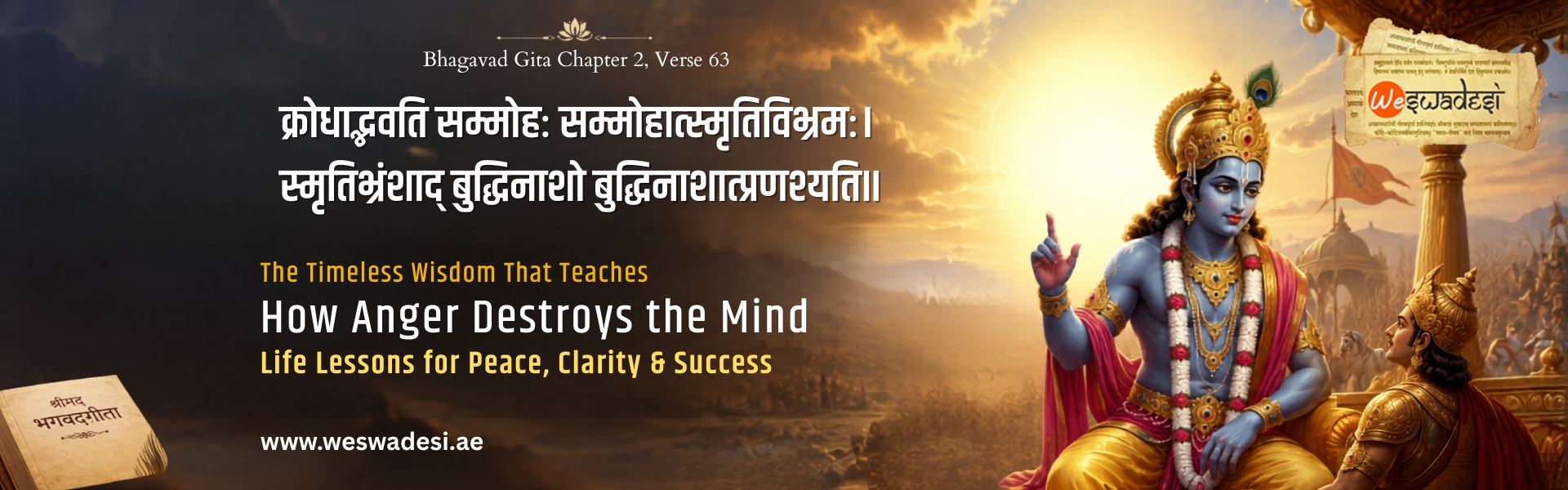
Introduction
The timeless wisdom of the Bhagavad Gita continues to guide millions of people toward peace, clarity, and spiritual growth. Among its most powerful teachings is the famous verse:
क्रोधाद्भवति सम्मोहः सम्मोहात्स्मृतिविभ्रमः।
स्मृतिभ्रंशाद् बुद्धिनाशो बुद्धिनाशात्प्रणश्यति॥
This sacred verse from Chapter 2, Verse 63 explains the dangerous chain reaction created by anger. In today’s stressful world, where frustration, anxiety, and emotional reactions are common, the teaching of क्रोधाद्भवति सम्मोहः is more relevant than ever.
The verse reveals a deep psychological truth: anger clouds judgment, destroys memory, weakens intelligence, and eventually leads a person toward downfall. Whether in relationships, business, parenting, or personal growth, uncontrolled anger silently damages our peace and success.
In this detailed blog, you will learn:
- The exact meaning of क्रोधाद्भवति सम्मोहः
- Word-by-word Sanskrit explanation
- Simple English meaning
- Life-changing lessons from Bhagavad Gita 2.63
- Practical ways to control anger
- Spiritual wisdom from Lord Krishna
- Real-life examples and modern relevance
- FAQs and daily application techniques
If you want peace of mind, emotional strength, and spiritual clarity, this verse can completely transform your thinking.
Bhagavad Gita Chapter 2 Verse 63
Sanskrit Shloka
क्रोधाद्भवति सम्मोहः सम्मोहात्स्मृतिविभ्रमः।
स्मृतिभ्रंशाद् बुद्धिनाशो बुद्धिनाशात्प्रणश्यति॥
भगवान श्रीकृष्ण इस श्लोक में बताते हैं कि क्रोध मनुष्य के पतन का कारण बनता है। क्रोध से मन में भ्रम उत्पन्न होता है, भ्रम से स्मृति और सही सोच नष्ट हो जाती है। जब बुद्धि नष्ट हो जाती है, तब मनुष्य सही और गलत का निर्णय नहीं कर पाता और अंततः उसका पतन हो जाता है।
सरल संदेश:
- क्रोध → भ्रम
- भ्रम → स्मृति का नाश
- स्मृति का नाश → बुद्धि का नाश
- बुद्धि का नाश → जीवन का पतन
इसलिए मनुष्य को क्रोध पर नियंत्रण रखकर शांत और विवेकपूर्ण जीवन जीना चाहिए।
Transliteration
Krodhād bhavati sammohah
sammohāt smriti-vibhramah
smriti-bhramshād buddhi-nāsho
buddhi-nāshāt pranashyati
Simple English Meaning of क्रोधाद्भवति सम्मोहः
Lord Krishna explains that anger leads to confusion and delusion. When the mind becomes confused, memory and wisdom are lost. Once wisdom disappears, a person loses the ability to make right decisions, and ultimately faces destruction.
This verse beautifully explains how negative emotions slowly destroy human intelligence and inner peace.
Word-by-Word Meaning
क्रोधात् (Krodhat)
From anger
भवति (Bhavati)
Arises or develops
सम्मोहः (Sammohah)
Delusion, confusion, loss of clarity
सम्मोहात् (Sammohat)
From delusion
स्मृति-विभ्रमः (Smriti Vibhramah)
Loss of memory and understanding
स्मृति-भ्रंशात् (Smriti Bhramshat)
From loss of memory
बुद्धि-नाशः (Buddhi Nashah)
Destruction of intelligence
बुद्धि-नाशात् (Buddhi Nashat)
From destruction of wisdom
प्रणश्यति (Pranashyati)
One is ruined or destroyed
The Deep Meaning of क्रोधाद्भवति सम्मोहः
The verse describes a complete psychological and spiritual chain reaction. Lord Krishna does not simply say that anger is bad. Instead, He explains exactly how anger destroys a person step by step.
Step 1: Anger Begins the Downfall
Every major conflict begins with uncontrolled emotions. Anger may appear small at first, but it grows rapidly and affects the mind.
When angry, people often:
- Speak harshly
- Make emotional decisions
- Hurt loved ones
- Lose patience
- Forget morality
Even a wise person can act foolishly during intense anger.
Step 2: Anger Creates Delusion
सम्मोहः — Loss of Clarity
This is the most dangerous stage.
A person under anger:
- Misunderstands situations
- Assumes wrong intentions
- Overreacts emotionally
- Cannot think calmly
The mind becomes clouded. Truth disappears. Ego takes control.
This is why many people regret their words after becoming calm.
Step 3: Memory and Awareness Collapse
स्मृतिविभ्रमः — Loss of Memory
Here, memory does not only mean remembering facts. It means forgetting:
- Values
- Wisdom
- Spiritual teachings
- Morality
- Life goals
An angry person forgets what truly matters.
For example:
- A loving parent may shout at a child
- A friend may destroy years of friendship
- A leader may make destructive choices
All because anger temporarily disconnects wisdom.
Step 4: Destruction of Intelligence
बुद्धिनाशः — Loss of Intelligence
Intelligence here means:
- Decision-making power
- Self-control
- Discrimination between right and wrong
Once intelligence is damaged, a person acts impulsively.
This stage leads to:
- Relationship breakdowns
- Business failures
- Mental stress
- Emotional suffering
- Regret and guilt
Step 5: Complete Downfall
प्रणश्यति — Destruction
This does not always mean physical destruction. It can mean:
- Loss of peace
- Loss of respect
- Loss of opportunities
- Loss of relationships
- Spiritual downfall
Lord Krishna warns that uncontrolled anger slowly destroys human life from within.
Why This Bhagavad Gita Verse Is So Relevant Today
Modern life is full of stress:
- Work pressure
- Financial tension
- Social media negativity
- Relationship conflicts
- Mental overload
People react instantly without thinking.
The teaching of क्रोधाद्भवति सम्मोहः is extremely relevant because it teaches emotional mastery.
Today, many problems arise because people:
- React too quickly
- Speak emotionally
- Lack patience
- Live under constant stress
The Bhagavad Gita teaches us to pause, think, and respond wisely.
Scientific Connection Between Anger and the Brain
Interestingly, modern psychology supports the wisdom of Bhagavad Gita.
When a person becomes angry:
- Stress hormones increase
- Logical thinking decreases
- Emotional reactions dominate
- Decision-making weakens
This perfectly matches:
- सम्मोहः (confusion)
- स्मृतिविभ्रमः (loss of awareness)
- बुद्धिनाशः (destruction of intelligence)
Ancient spiritual wisdom and modern science beautifully align.
Life Lessons from क्रोधाद्भवति सम्मोहः
1. Emotional Control Is True Strength
Many people think anger shows power. But Lord Krishna teaches the opposite.
True strength means:
- Staying calm under pressure
- Responding wisely
- Controlling emotions
2. Pause Before Reacting
One moment of anger can destroy years of trust.
Before reacting:
- Take deep breaths
- Stay silent briefly
- Observe your thoughts
This small pause can prevent major mistakes.
3. Protect Your Mind
The mind is extremely powerful but also sensitive.
Negative emotions:
- Disturb peace
- Reduce clarity
- Increase suffering
Protecting the mind is essential for happiness.
4. Wisdom Must Guide Emotions
Emotions are natural, but wisdom must control them.
The Bhagavad Gita teaches balance:
- Feel emotions
- But do not become controlled by them
5. Inner Peace Is More Valuable Than Winning Arguments
Many people win arguments but lose relationships.
Ask yourself:
- Is proving myself right more important than peace?
Often, silence is the higher wisdom.
Practical Ways to Control Anger According to Bhagavad Gita
Practice Self-Awareness
Observe your emotions daily.
Ask:
- Why am I angry?
- What triggered me?
- Is my reaction helpful?
Awareness reduces emotional reactions.
Meditation and Deep Breathing
Meditation calms the nervous system.
Benefits:
- Better focus
- Emotional stability
- Reduced stress
- Increased patience
Even 10 minutes daily can help.
Chanting God’s Name
Spiritual chanting purifies the mind.
Many people chant:
- Hare Krishna Mahamantra
- Om Namah Shivaya
- Om
Chanting creates inner calmness.
Avoid Immediate Reactions
Do not reply instantly during anger.
Instead:
- Wait
- Calm down
- Think clearly
Most conflicts reduce with patience.
Read Spiritual Knowledge Daily
Reading scriptures improves thinking.
You can read:
- Bhagavad Gita
- Ramayana
- Upanishads
- Spiritual books
Positive knowledge changes the mind.
Real-Life Examples of Anger Causing Destruction
Family Relationships
A few angry words can emotionally hurt loved ones for years.
Many broken relationships begin with uncontrolled speech.
Workplace Conflicts
Employees and leaders who cannot control anger often:
- Damage teamwork
- Create stress
- Lose respect
Calm leadership creates success.
Social Media Anger
Today, people react emotionally online without understanding facts.
This creates:
- Negativity
- Misunderstanding
- Mental stress
The Bhagavad Gita teaches mindful communication.
Spiritual Perspective on Anger
In spirituality, anger is considered a major obstacle to inner peace.
Anger:
- Disturbs meditation
- Weakens consciousness
- Strengthens ego
Lord Krishna teaches detachment and balance.
A peaceful mind:
- Sees clearly
- Thinks wisely
- Lives joyfully
Connection Between Desire and Anger
Bhagavad Gita explains earlier that anger arises from unfulfilled desires.
The sequence is:
- Desire
- Attachment
- Frustration
- Anger
- Confusion
- Downfall
This wisdom helps us understand the root cause of emotional suffering.
How to Apply Bhagavad Gita 2.63 in Daily Life
During Arguments
Instead of shouting:
- Listen carefully
- Speak softly
- Focus on solutions
While Parenting
Children learn from behavior.
Calm parenting creates emotionally healthy children.
In Marriage
Patience and understanding strengthen relationships.
Anger weakens emotional trust.
In Business
Wise decisions require calm thinking.
Successful leaders remain emotionally balanced.
During Stressful Situations
Remember the verse:
“क्रोधाद्भवति सम्मोहः”
This reminder can instantly calm the mind.
The Hidden Spiritual Message of This Verse
The deeper teaching is not only about anger.
Lord Krishna teaches mastery over the mind.
A controlled mind:
- Creates peace
- Protects wisdom
- Leads toward spiritual growth
An uncontrolled mind:
- Creates suffering
- Increases confusion
- Destroys happiness
The battle is internal.
Why Krishna’s Teaching Is Timeless
The Bhagavad Gita remains relevant because human emotions never change.
People in every generation struggle with:
- Anger
- Ego
- Fear
- Stress
- Desire
Krishna’s wisdom offers eternal solutions.
Daily Affirmations Inspired by क्रोधाद्भवति सम्मोहः
Repeat these affirmations daily:
- I choose peace over anger.
- My wisdom is stronger than my emotions.
- I respond calmly and wisely.
- I protect my mind from negativity.
- Inner peace is my true strength.
These positive thoughts gradually transform behavior.
Best Time to Read Bhagavad Gita
Many spiritual practitioners prefer:
- Early morning
- Before meditation
- Before sleeping
Daily reading improves:
- Focus
- Peace
- Spiritual understanding
Even one verse daily can change life deeply.
Common Mistakes People Make While Controlling Anger
Suppressing Emotions Completely
Controlling anger does not mean hiding emotions.
Healthy expression matters.
Reacting Immediately
Instant reactions often create regret.
Patience is wisdom.
Ignoring Spiritual Growth
Inner peace requires spiritual practice.
Without mental discipline, anger easily returns.
Benefits of Practicing Krishna’s Teachings
People who apply Bhagavad Gita wisdom often experience:
- Better emotional control
- Improved relationships
- Reduced stress
- Clear decision-making
- Spiritual growth
- Greater happiness
Powerful Moral of Bhagavad Gita 2.63
The verse teaches one powerful truth:
A person is not destroyed by enemies outside, but by uncontrolled emotions inside.
Mastering anger is mastering life.
FAQs About क्रोधाद्भवति सम्मोहः
What is the meaning of क्रोधाद्भवति सम्मोहः?
It means “From anger comes delusion or confusion.” Lord Krishna explains that anger destroys clarity and wisdom.
Which chapter is क्रोधाद्भवति सम्मोहः from?
This verse is from Bhagavad Gita.
What does Bhagavad Gita say about anger?
The Bhagavad Gita teaches that anger leads to confusion, loss of intelligence, and suffering. Emotional control is essential for peace.
How can I control anger spiritually?
You can control anger through:
- Meditation
- Self-awareness
- Chanting
- Deep breathing
- Reading spiritual knowledge
Why is Bhagavad Gita 2.63 important today?
Modern life is stressful and emotionally demanding. This verse teaches practical emotional intelligence and mental peace.
What is the main lesson of this shloka?
The main lesson is that uncontrolled anger destroys wisdom and peace, while self-control leads to happiness and success.
Start Applying Bhagavad Gita Wisdom Today
The teaching of क्रोधाद्भवति सम्मोहः is not just a spiritual verse — it is a practical guide for modern life.
If you truly want:
- Mental peace
- Better relationships
- Emotional strength
- Spiritual growth
Start practicing Krishna’s wisdom daily.
Read one verse of the Bhagavad Gita every day and observe how your thinking slowly transforms.
Final Thoughts
The beauty of क्रोधाद्भवति सम्मोहः lies in its timeless truth. Lord Krishna explains the exact process through which anger destroys human wisdom.
In just one verse, the Bhagavad Gita reveals:
- The psychology of emotions
- The importance of self-control
- The path toward inner peace
When we understand this teaching deeply, we become more patient, wise, and peaceful.
In a world filled with stress and emotional reactions, Bhagavad Gita 2.63 shines like a guiding light.
Whenever anger arises, remember:
क्रोधाद्भवति सम्मोहः…
And choose wisdom over reaction, peace over ego, and clarity over confusion.
