

- Your cart is empty
- Continue Shopping
The Bhagavad Gita Secret to Controlling Anger and Desires (Shloka 2.62) – Gita Updesh

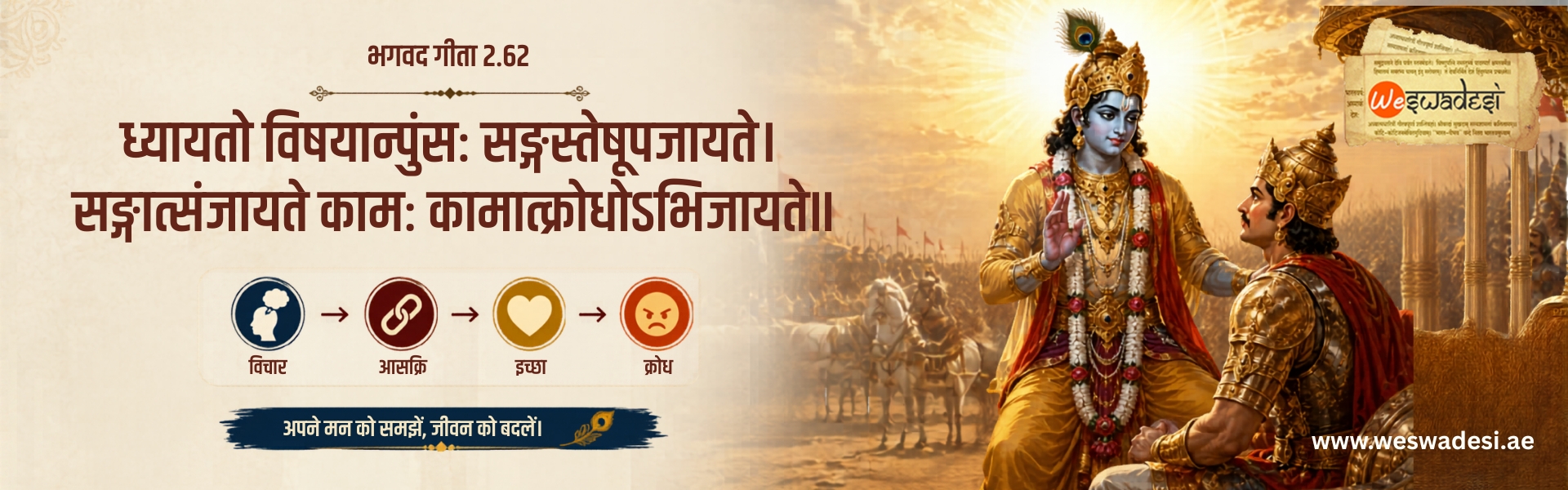
The timeless wisdom of the Bhagavad Gita continues to guide millions of people toward peace, clarity, and self-control. One of the most powerful teachings appears in Chapter 2, Verse 62, where Lord Krishna explains the psychological chain that leads from desire to anger and eventually to suffering.
This verse is deeply relevant in today’s world filled with distractions, stress, social media addiction, emotional instability, and endless desires.
Here is the Sanskrit verse:
ध्यायतो विषयान्पुंसः सङ्गस्तेषूपजायते।
सङ्गात्संजायते कामः कामात्क्रोधोऽभिजायते॥
Transliteration
Dhyāyato viṣayān puṁsaḥ saṅgas teṣūpajāyate
Saṅgāt sañjāyate kāmaḥ kāmāt krodho’bhijāyate
Simple English Meaning
When a person constantly thinks about worldly pleasures and material objects, attachment develops. From attachment comes desire, and when desires are not fulfilled, anger arises.
This single verse beautifully explains how the human mind works and why people suffer from emotional disturbance.
मनुष्य जब बार-बार सांसारिक विषयों और भोग-विलास के बारे में सोचता है, तो उन विषयों में उसकी आसक्ति (लगाव) पैदा हो जाती है। आसक्ति से इच्छा उत्पन्न होती है, और जब इच्छा पूरी नहीं होती, तो क्रोध पैदा होता है।
यह श्लोक हमें सिखाता है कि:
“विचार → आसक्ति → इच्छा → क्रोध → दुख”
यदि हम अपने विचारों और इच्छाओं को नियंत्रित कर लें, तो जीवन में शांति और संतुलन प्राप्त कर सकते हैं।
भगवान श्रीकृष्ण का यह संदेश आज भी मानसिक शांति और आत्म-नियंत्रण का अमूल्य मार्गदर्शन देता है।
Why Bhagavad Gita Verse 2.62 Is So Important Today
Modern life constantly pulls our attention toward external pleasures:
- Social media validation
- Material success
- Luxury lifestyle
- Comparison with others
- Relationships and expectations
- Fame and recognition
The more we think about these things, the stronger our attachment becomes. Eventually, these attachments turn into desires. And when reality does not match our expectations, frustration and anger appear.
This teaching from the Bhagavad Gita is not just spiritual wisdom. It is also a practical guide to emotional intelligence and mental peace.
Deep Meaning of Bhagavad Gita Verse 2.62
1. “ध्यायतो विषयान्पुंसः” — Constant Thinking Creates Attachment
The verse begins by explaining that repeated thinking about worldly objects creates mental focus and emotional involvement.
Whatever the mind repeatedly thinks about becomes stronger.
For example:
- Constantly thinking about money increases greed.
- Thinking excessively about someone increases emotional dependency.
- Obsessing over success creates pressure and anxiety.
The mind becomes attached to whatever it repeatedly entertains.
Real-Life Example
A person scrolling through luxury lifestyle videos every day may slowly begin feeling dissatisfied with their own life. Over time, desire grows naturally.
This is how attachment silently begins.
2. “सङ्गस्तेषूपजायते” — Attachment Is Born
Attachment means emotional dependence.
When attachment grows:
- Happiness depends on external things
- Peace depends on people’s behavior
- Self-worth depends on success
- Mood depends on outcomes
This creates emotional instability.
The problem is not enjoying life. The problem begins when inner peace becomes dependent on external circumstances.
Signs of Attachment
- Fear of losing something
- Overthinking constantly
- Emotional dependence
- Jealousy and insecurity
- Possessiveness
- Difficulty accepting change
The verse warns us that attachment slowly controls the mind.
3. “सङ्गात्संजायते कामः” — Attachment Creates Desire
From attachment comes desire.
Once the mind becomes attached, it starts demanding fulfillment.
Desire itself is endless. One fulfilled desire often creates another.
Examples include:
- Wanting more money after achieving financial goals
- Seeking more validation after receiving praise
- Craving more pleasure after temporary enjoyment
The cycle never ends.
Why Desires Create Stress
Desires create expectations.
And expectations create mental pressure.
A person may think:
- “I must get this promotion.”
- “People should respect me.”
- “Things must happen my way.”
When life does not cooperate, suffering begins.
4. “कामात्क्रोधोऽभिजायते” — Unfulfilled Desire Leads to Anger
This is one of the deepest psychological truths in the Bhagavad Gita.
Anger is often the result of blocked desire.
When expectations fail:
- Anger appears
- Frustration increases
- Relationships suffer
- Decisions become impulsive
Lord Krishna explains that anger does not appear suddenly. It develops gradually through attachment and desire.
Common Causes of Anger
- Expectations from family
- Financial pressure
- Career frustration
- Relationship disappointments
- Social comparison
- Ego clashes
Most anger has hidden desires behind it.
The Psychological Chain Explained by Lord Krishna
The verse reveals a complete mental process:
- Repeated thinking
- Attachment develops
- Desire grows
- Expectations increase
- Desire gets blocked
- Anger arises
- Mental peace is destroyed
This is one of the most powerful analyses of human psychology ever written.
Bhagavad Gita and Modern Psychology
Interestingly, modern psychology supports many teachings found in the Bhagavad Gita.
Experts today discuss:
- Obsessive thinking
- Emotional attachment
- Dopamine addiction
- Anger triggers
- Stress cycles
- Cognitive patterns
The Gita explained these mental patterns thousands of years ago.
How Overthinking Affects the Brain
Repeated thoughts strengthen neural pathways.
This means:
- Negative thinking becomes habitual
- Cravings become stronger
- Emotional reactions become automatic
That is why controlling attention is extremely important.
How to Apply Bhagavad Gita Verse 2.62 in Daily Life
The real beauty of this verse is its practical value.
Here are powerful ways to apply it in modern life.
1. Control What You Focus On
Your thoughts shape your emotions.
Protect your mind from:
- Toxic content
- Negative environments
- Endless comparison
- Fear-based thinking
Instead, focus on:
- Positive learning
- Spiritual growth
- Meaningful relationships
- Gratitude
Practical Tip
Ask yourself:
“What am I constantly thinking about?”
That answer reveals your future emotional state.
2. Reduce Emotional Dependency
True peace comes from inner stability.
Do not make happiness completely dependent on:
- People
- Social approval
- Money
- Achievements
Enjoy life, but remain emotionally balanced.
This is the essence of spiritual maturity.
3. Practice Mindfulness and Self-Awareness
Most people react automatically.
The Bhagavad Gita teaches awareness before reaction.
Before anger arises:
- Pause
- Observe your thoughts
- Identify hidden expectations
- Respond calmly
This simple practice can transform relationships.
4. Learn to Manage Desires
Desires are natural, but uncontrolled desires create suffering.
Healthy goals are good.
But obsession creates mental disturbance.
Healthy Desire vs Unhealthy Desire
| Healthy Desire | Unhealthy Desire |
|---|---|
| Inspires growth | Creates anxiety |
| Motivates action | Controls emotions |
| Accepts outcomes | Demands perfection |
| Balanced mindset | Emotional attachment |
The key is balance.
5. Practice Detachment Without Escaping Life
Detachment does not mean giving up responsibilities.
It means:
- Doing your duty sincerely
- Accepting outcomes calmly
- Staying emotionally balanced
This is true inner freedom.
Lessons for Students from Bhagavad Gita Verse 2.62
Students today face:
- Competition stress
- Social pressure
- Anxiety about success
This verse teaches students:
- Focus on effort
- Avoid unhealthy comparison
- Control distractions
- Stay emotionally balanced
Student Life Application
Instead of:
“I must defeat everyone.”
Think:
“I will give my best sincerely.”
This reduces stress and improves clarity.
Lessons for Professionals and Business Owners
Modern work culture often creates:
- Burnout
- Anger
- Frustration
- Constant pressure
The root cause is often excessive attachment to outcomes.
Practical Workplace Wisdom
- Work sincerely
- Avoid ego-based competition
- Stay calm during setbacks
- Do not let temporary failure destroy inner peace
A stable mind makes better decisions.
Relationship Wisdom from Bhagavad Gita 2.62
Many relationship conflicts arise from expectations and attachment.
Examples:
- Expecting constant attention
- Wanting people to behave perfectly
- Emotional possessiveness
When expectations fail, anger appears.
Healthy Relationships Require
- Respect
- Understanding
- Emotional balance
- Space and trust
Love becomes beautiful when it is free from excessive attachment.
Social Media and the Bhagavad Gita
This verse is extremely relevant in the digital age.
Social media constantly stimulates:
- Desire
- Comparison
- Jealousy
- Validation-seeking
The mind keeps thinking about external pleasures.
This creates dissatisfaction.
How to Protect Mental Peace
- Limit unnecessary scrolling
- Avoid comparison traps
- Consume uplifting content
- Take regular digital detox breaks
Guarding your attention protects your peace.
Spiritual Meaning of Bhagavad Gita Verse 2.62
Spiritually, this verse teaches mastery over the mind.
The mind naturally moves toward external objects.
But inner peace comes from:
- Self-awareness
- Discipline
- Wisdom
- Connection with the Divine
The goal is not suppression but understanding.
When awareness increases, emotional reactions decrease naturally.
Bhagavad Gita Verse 2.62 and Anger Management
Most anger management advice focuses only on controlling reactions.
But Lord Krishna explains the deeper root cause:
- Attachment
- Desire
- Expectation
Unless these are understood, anger keeps returning.
Powerful Anger Management Tips from the Gita
Pause Before Reacting
Silence for a few moments can prevent major damage.
Observe the Hidden Desire
Ask:
“What expectation of mine is being blocked?”
Accept Imperfection
Life will not always go according to plan.
Strengthen Inner Peace
Meditation, prayer, and self-reflection calm the mind.
Connection Between Verse 2.62 and Verse 2.63
The next verse continues the chain of destruction.
It explains:
- Anger leads to delusion
- Delusion destroys memory
- Memory loss destroys intelligence
- Intelligence destroyed leads to downfall
Together, these verses explain how uncontrolled emotions destroy judgment.
Why This Verse Is Timeless
Even after thousands of years, human emotions remain the same.
People still struggle with:
- Desire
- Anger
- Jealousy
- Stress
- Attachment
That is why the wisdom of the Bhagavad Gita remains eternally relevant.
Daily Practice to Apply Bhagavad Gita Verse 2.62
Here is a simple daily routine.
Morning
- Read one spiritual verse
- Practice gratitude
- Avoid phone usage immediately after waking
During the Day
- Observe emotional triggers
- Stay mindful of thoughts
- Avoid unnecessary arguments
Evening
- Reflect on your reactions
- Identify hidden expectations
- Practice calm breathing
Small daily awareness creates major transformation.
Best Life Lessons from Bhagavad Gita Verse 2.62
Key Takeaways
- Thoughts shape destiny
- Attachment creates emotional dependence
- Desires increase mental pressure
- Anger often comes from blocked expectations
- Self-awareness protects peace
- Inner stability is true strength
This verse teaches emotional mastery in a simple yet profound way.
Frequently Asked Questions (FAQs)
What is the meaning of Bhagavad Gita Verse 2.62?
Bhagavad Gita Verse 2.62 explains that constant thinking about worldly pleasures creates attachment. Attachment leads to desire, and unfulfilled desire creates anger.
Why does desire lead to anger?
When desires or expectations are blocked, frustration develops. This frustration eventually turns into anger.
How can I control anger according to the Bhagavad Gita?
The Gita teaches that anger can be controlled by:
- Reducing attachment
- Managing desires
- Practicing awareness
- Staying emotionally balanced
Is attachment always bad?
Attachment becomes harmful when peace and happiness depend entirely on external people or outcomes.
Balanced love and responsibility are healthy.
How is Bhagavad Gita Verse 2.62 relevant today?
This verse perfectly explains modern problems like:
- Stress
- Overthinking
- Social media addiction
- Emotional instability
- Anger issues
It offers timeless solutions for mental peace.
Final Thoughts on Bhagavad Gita Verse 2.62
The wisdom of Bhagavad Gita Chapter 2, Verse 62 is incredibly practical for modern life.
Lord Krishna reveals a simple but powerful truth:
What we repeatedly think about eventually controls our emotions.
By understanding the chain of:
- Thought
- Attachment
- Desire
- Anger
we can protect our peace, improve relationships, and live with greater awareness.
In a world full of distractions and emotional pressure, this verse serves as a timeless guide for inner stability and wisdom.
Strong CTA
If this powerful teaching from the Bhagavad Gita inspired you, share this article with someone who may need emotional clarity and inner peace today. Explore more timeless wisdom from the Gita to transform your mindset, relationships, and daily life.
