

- Your cart is empty
- Continue Shopping
Jasu Raj Priya Praja Dukhari: The Timeless Ramayan Teaching on Leadership and Responsibility

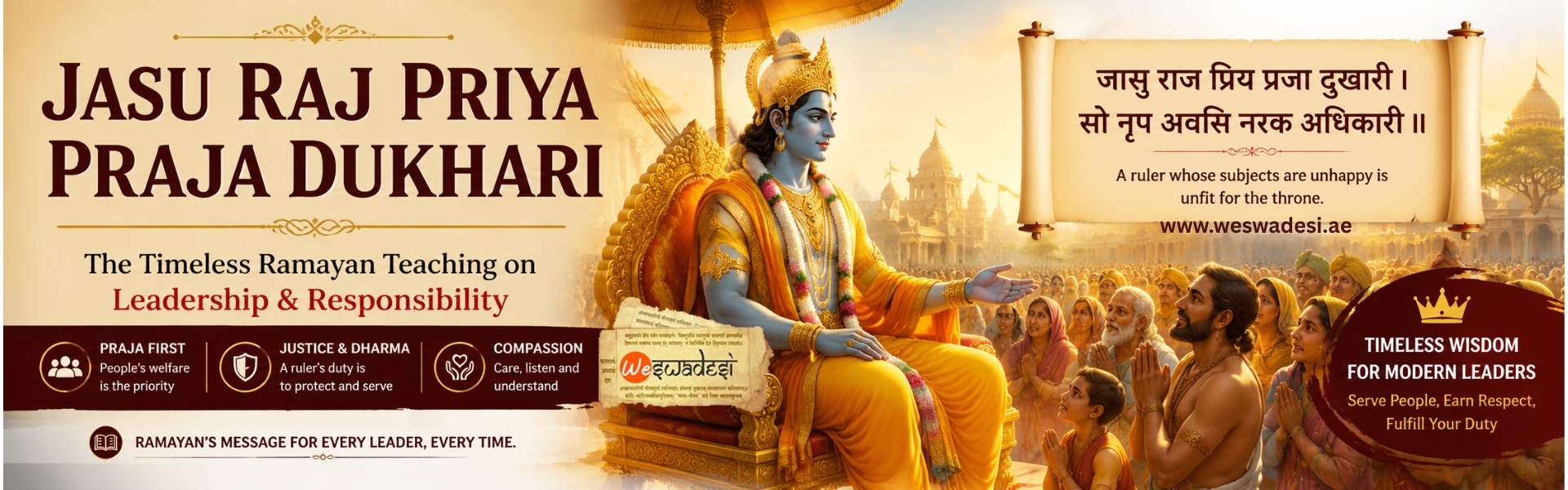
The famous Ramayan verse “Jasu Raj Priya Praja Dukhari, So Nrip Avasi Narak Adhikari” is one of the most powerful teachings on leadership, governance, and social responsibility. This couplet reminds rulers, leaders, administrators, and even modern managers that true leadership is measured by the happiness and well-being of the people they serve.
In today’s world, where leadership is discussed in politics, business, and society, the message of Jasu Raj Priya Praja Dukhari remains as relevant as ever. The verse teaches that a ruler who focuses only on personal comfort while ignoring the suffering of the people ultimately fails in his duty.
The Original Doha
जासु राज प्रिय प्रजा दुखारी।
सो नृप अवसि नरक अधिकारी॥
English Transliteration
Jasu Raj Priya Praja Dukhari,
So Nrip Avasi Narak Adhikari.
Simple English Meaning
A ruler whose subjects remain unhappy and suffer while he remains focused on his own comfort and interests is certainly deserving of punishment and downfall.
Where Does This Verse Appear in Ramayan?
This famous teaching is found in Ramcharitmanas, composed by the great saint-poet Goswami Tulsidas.
The verse reflects the ideal principles of governance that Lord Rama followed during his reign. It emphasizes that the welfare of citizens should always come before the personal interests of the ruler.
Understanding the Deeper Meaning of Jasu Raj Priya Praja Dukhari
At first glance, the verse appears to be about kings and kingdoms. However, its wisdom applies to every form of leadership.
A True Leader Serves Others
The verse teaches that leadership is not about power.
Leadership is about:
- Service
- Responsibility
- Compassion
- Accountability
- Public welfare
A leader who enjoys luxury while people suffer has abandoned his duty.
Public Welfare Comes First
The happiness of citizens is the greatest measure of successful governance.
A good ruler ensures:
- Safety and security
- Justice for all
- Economic stability
- Equal opportunities
- Protection of moral values
When these responsibilities are ignored, leadership loses its purpose.
Power Without Responsibility Leads to Failure
The Ramayan repeatedly shows that power alone cannot create greatness.
Great leaders combine:
- Authority with humility
- Strength with compassion
- Power with responsibility
Without these qualities, leadership becomes self-centered and destructive.
Leadership Lessons from Lord Rama
Lord Rama Listened to His People
One of the greatest qualities of Lord Rama was his concern for public opinion and public welfare.
He understood that:
- A king exists for the people.
- The kingdom’s prosperity is the king’s success.
- Public suffering is the ruler’s responsibility.
This made Rama the ideal ruler.
Rama Rajya: The Model of Good Governance
The concept of Rama Rajya is often considered the perfect model of governance.
Characteristics of Rama Rajya included:
- Justice for everyone
- Peace and harmony
- Prosperity
- Moral values
- Respect for law
- Public happiness
The verse “Jasu Raj Priya Praja Dukhari” directly supports these ideals.
Modern Relevance of Jasu Raj Priya Praja Dukhari
Many people think ancient scriptures only belong to the past. In reality, this teaching is highly relevant today.
For Political Leaders
Political leaders should:
- Focus on citizens’ welfare
- Reduce corruption
- Improve public services
- Ensure justice
A government succeeds when people prosper.
For Business Leaders
Company owners and managers can learn from this verse.
Employees are similar to citizens in an organization.
A good leader:
- Supports employees
- Creates a healthy work culture
- Ensures fairness
- Encourages growth
Ignoring employees while pursuing personal gain often leads to organizational decline.
For Parents
Parents are leaders within a family.
The teaching reminds parents to:
- Prioritize children’s well-being
- Guide with compassion
- Lead by example
For Teachers
Teachers shape future generations.
They should:
- Serve students sincerely
- Share knowledge responsibly
- Encourage moral development
Why This Ramayan Verse Is So Powerful
This verse remains popular because it teaches a universal truth:
Leadership is not about being served; it is about serving others.
Whether someone is:
- A king
- A politician
- A manager
- A teacher
- A parent
The principle remains the same.
The well-being of those under your care is your responsibility.
Moral Values Hidden in the Doha
Compassion
A leader must understand people’s difficulties.
Accountability
Leaders must accept responsibility for outcomes.
Selflessness
Personal interests should not come before public welfare.
Justice
Fair treatment is essential for trust and stability.
Duty
Every leadership position carries obligations.
Practical Life Lessons We Can Apply Today
Here are some ways to implement the wisdom of Jasu Raj Priya Praja Dukhari:
Put Others Before Personal Gain
Think about how your decisions affect others.
Listen More
Understand the concerns of family members, employees, students, or community members.
Be Responsible
Accept accountability for mistakes.
Serve with Humility
True respect comes from service, not authority.
Create Positive Change
Use your position to improve the lives of others.
What Happens When Leaders Ignore This Teaching?
History provides many examples where rulers focused on personal luxury while people suffered.
Common consequences include:
- Public dissatisfaction
- Loss of trust
- Social unrest
- Organizational collapse
- Declining influence
The Ramayan warns against such leadership failures through this powerful verse.
Spiritual Perspective of the Doha
From a spiritual viewpoint, the verse teaches that selfish leadership creates negative consequences.
A person who misuses authority:
- Violates dharma
- Creates suffering
- Accumulates negative karma
Conversely, selfless service leads to respect, virtue, and spiritual growth.
Conclusion
The timeless Ramayan teaching “Jasu Raj Priya Praja Dukhari, So Nrip Avasi Narak Adhikari” reminds us that leadership is a sacred responsibility. Whether governing a nation, managing a company, teaching students, or guiding a family, true success comes from serving others.
Lord Rama’s example shows that the happiness and welfare of people should always remain the highest priority. Leaders who forget this principle may gain temporary power, but they ultimately lose trust, respect, and lasting success.
Even centuries later, this powerful Ramayan verse continues to inspire better leadership, stronger communities, and a more compassionate society.
Frequently Asked Questions (FAQs)
1. What is the meaning of Jasu Raj Priya Praja Dukhari?
It means that a ruler whose people suffer while he enjoys personal comfort is unfit for leadership and deserving of punishment.
2. Which scripture contains this verse?
The verse appears in Ramcharitmanas by Goswami Tulsidas.
3. What is the main message of this doha?
The welfare of people should always be the top priority of a leader.
4. Why is this verse important today?
It teaches ethical leadership, accountability, and public service, which remain relevant in modern society.
5. How does this teaching relate to Lord Rama?
Lord Rama exemplified ideal leadership by prioritizing the well-being of his citizens.
6. What is Rama Rajya?
Rama Rajya refers to the ideal kingdom of Lord Rama characterized by justice, peace, and prosperity.
7. Can business leaders learn from this verse?
Yes. It teaches leaders to prioritize employee welfare and organizational well-being.
8. What does the verse teach about power?
Power should always be accompanied by responsibility and service.
9. Does this teaching apply to families?
Yes. Parents and guardians can use this principle to guide and care for their families.
10. Why is this doha still popular?
Because its message about responsible leadership is timeless and universally applicable.
More Meaningful Readings
- Best Leadership Lessons from Lord Rama
- Kaam Krodh Mad Lobh in Ramayan
- Fear Without Love: Meaning of Bhay Binu Preeti
