

- Your cart is empty
- Continue Shopping
Par Upadesh Kushal Bahutere: 15 Powerful Life Lessons About Practicing What You Preach

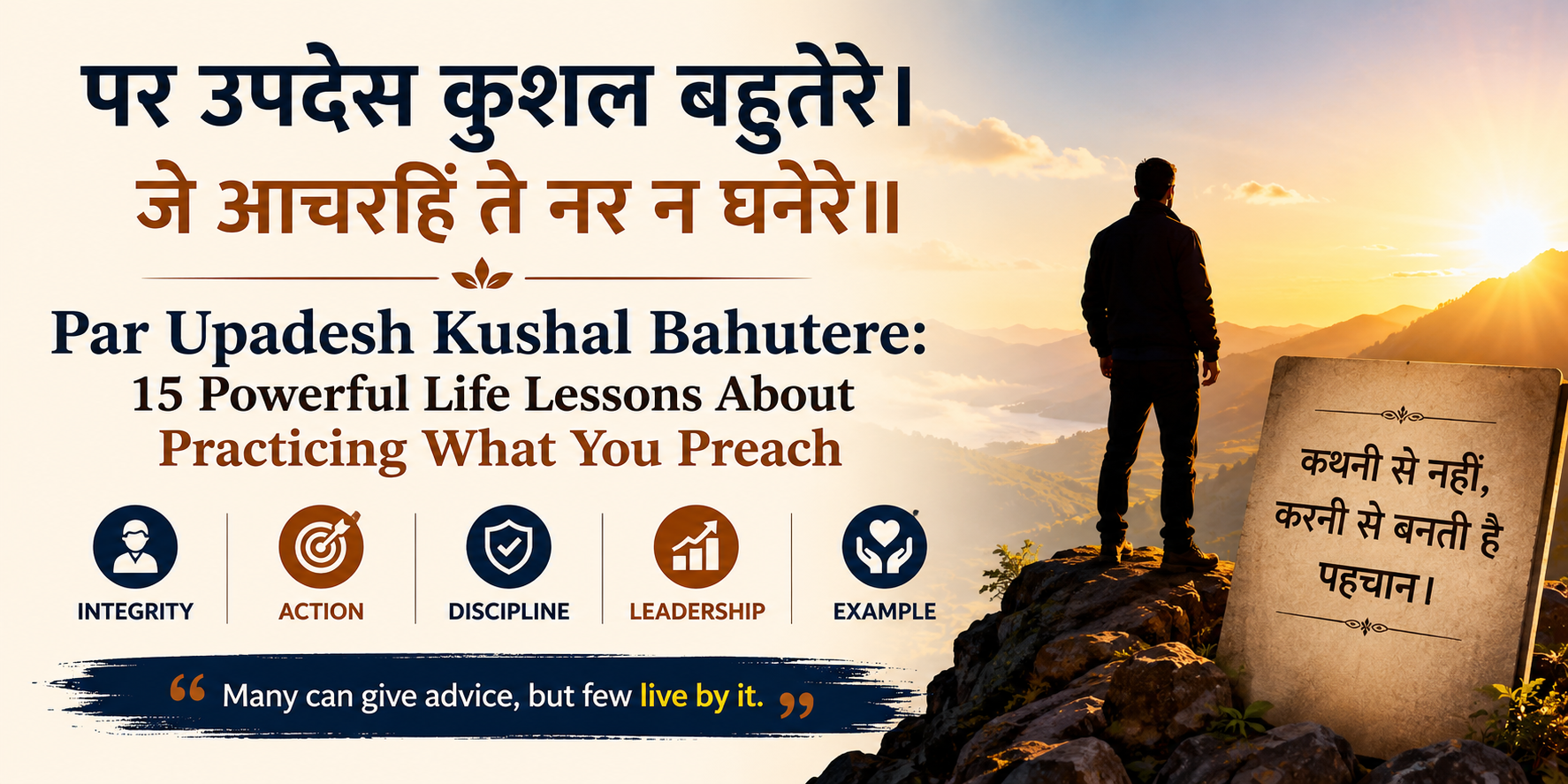
“Par Upadesh Kushal Bahutere, Je Acharahin Te Nar Na Ghanere” is one of the most meaningful teachings from the Ramcharitmanas. Even after centuries, its wisdom remains highly relevant in modern life. The verse teaches a simple but powerful truth: many people are excellent at giving advice, but very few actually follow that advice in their own lives.
In today’s world, people constantly share opinions, guidance, and motivational quotes on social media, in workplaces, and within families. However, true greatness is not measured by what we say. It is measured by what we do. The message of Par Upadesh Kushal Bahutere reminds us that actions speak louder than words.
Whether you are a student, professional, entrepreneur, parent, teacher, leader, or spiritual seeker, this timeless teaching can transform the way you live and inspire others. In this article, we will explore the meaning, significance, practical applications, and life-changing lessons hidden within this powerful verse.
The Original Verse
पर उपदेस कुशल बहुतेरे।
जे आचरहिं ते नर न घनेरे॥
हिंदी में अर्थ
दूसरों को उपदेश देने, ज्ञान बाँटने और सही मार्ग बताने वाले लोग संसार में बहुत हैं, लेकिन जो स्वयं उन उपदेशों का पालन करते हैं, ऐसे लोग बहुत कम होते हैं।
यह चौपाई हमें सिखाती है कि केवल अच्छी बातें कहना पर्याप्त नहीं है। वास्तविक महानता तब है जब व्यक्ति अपने बताए हुए सिद्धांतों को अपने जीवन में भी उतारे।
सीख
- कथनी और करनी में एकरूपता होनी चाहिए।
- दूसरों को सलाह देने से पहले स्वयं उसका पालन करना चाहिए।
- आदर्श व्यक्ति वही है जो अपने आचरण से शिक्षा देता है।
English Meaning
There are many people who are skilled at advising and teaching others, but very few actually practice those teachings in their own lives.
This verse emphasizes that true wisdom is not merely speaking about good values; it is living according to them. A person’s actions carry far more weight than their words.
Life Lesson
- Practice what you preach.
- Actions are more powerful than advice.
- True character is revealed through conduct, not just words.
- The best teachers lead by example.
Simple Example
A person may tell others to be honest, disciplined, and punctual. However, if that person does not follow these values personally, the advice loses its strength. The one who lives by these principles becomes a true role model.
Key Message:
“Many can teach the right path, but only a few truly walk on it.”
Transliteration
Par Upadesh Kushal Bahutere,
Je Acharahin Te Nar Na Ghanere.
English Meaning
Many people are skilled at giving advice to others, but those who actually practice what they preach are very few.
Simple Interpretation
It is easy to tell others what is right and wrong. It is much harder to apply the same principles in our own lives. Real wisdom comes not from speaking but from living according to those values.
Why This Verse Is More Relevant Than Ever
Modern society has made sharing opinions easier than ever before. People constantly provide advice on:
- Success
- Fitness
- Relationships
- Parenting
- Spirituality
- Money management
- Leadership
- Productivity
Yet many struggle to follow their own recommendations.
This gap between words and actions creates problems in families, organizations, communities, and even personal development. The wisdom of Par Upadesh Kushal Bahutere encourages us to close that gap and become examples through our actions.
The Difference Between Knowledge and Wisdom
Many people confuse knowledge with wisdom.
Knowledge
Knowledge means understanding facts, principles, and information.
Examples:
- Knowing exercise is good for health.
- Knowing honesty is important.
- Knowing discipline leads to success.
Wisdom
Wisdom means applying knowledge in real life.
Examples:
- Exercising regularly.
- Being honest even when it is difficult.
- Maintaining discipline every day.
The verse reminds us that knowledge without action has limited value.
Why People Find It Easy to Give Advice
Human psychology explains why giving advice feels easier than following it.
Advice Requires Little Effort
Talking is easier than acting.
A person can recommend waking up early without actually waking up early themselves.
Advice Creates a Feeling of Superiority
Sometimes people enjoy appearing knowledgeable or experienced.
Giving advice may temporarily boost confidence even when the person does not practice what they teach.
We Notice Others’ Mistakes More Easily
People often identify faults in others faster than they recognize their own weaknesses.
Real Change Requires Discipline
Following good advice consistently requires effort, sacrifice, patience, and self-control.
That is why many advise but few practice.
The Hidden Cost of Not Practicing What We Preach
When words and actions do not match, several negative consequences appear.
Loss of Trust
People trust actions more than words.
If someone repeatedly gives advice but behaves differently, credibility declines.
Reduced Influence
A leader who does not follow their own rules loses authority.
Personal Frustration
Knowing what is right but not doing it creates inner conflict.
Damaged Relationships
Children, employees, friends, and family members notice inconsistency quickly.
Trust becomes difficult to maintain.
The Power of Leading by Example
History shows that the greatest leaders inspired others through action.
People rarely follow instructions alone.
They follow examples.
When your actions match your words:
- Trust increases.
- Respect grows.
- Influence expands.
- Relationships strengthen.
- Leadership becomes natural.
The strongest message you send is your behavior.
Lesson 1: Practice Before You Preach
Before advising others, ask yourself:
“Am I following this advice myself?”
This simple question can transform personal growth.
People respect lived experience more than theoretical knowledge.
Lesson 2: Actions Speak Louder Than Words
A person who silently lives with integrity often teaches more than a person who constantly lectures others.
Examples include:
- Honest business owners
- Dedicated teachers
- Responsible parents
- Disciplined athletes
Their actions become their message.
Lesson 3: Self-Improvement Comes First
Improving yourself should always be the first priority.
Instead of focusing on changing others:
- Improve your habits.
- Improve your attitude.
- Improve your character.
- Improve your discipline.
Personal transformation naturally influences others.
Lesson 4: Consistency Builds Character
Character is not created in a single day.
It develops through repeated actions.
Small daily habits eventually become your identity.
Consistency matters more than occasional perfection.
Lesson 5: Integrity Is the Foundation of Success
Integrity means doing the right thing even when nobody is watching.
People with integrity align:
- Thoughts
- Words
- Actions
This alignment creates trust and long-term success.
Lesson 6: Humility Makes Advice More Effective
People are more willing to listen when advice comes from humility rather than arrogance.
Instead of saying:
“You should do this.”
Try saying:
“This helped me. It may help you too.”
Humility creates connection.
Lesson 7: Example Is the Best Teacher
Parents often tell children to:
- Read books
- Avoid excessive screen time
- Be respectful
However, children learn primarily through observation.
Your example teaches more than your instructions.
Lesson 8: Leadership Requires Personal Discipline
Great leaders hold themselves accountable first.
They do not expect standards from others that they refuse to follow themselves.
This principle applies to:
- Business leaders
- Teachers
- Managers
- Community leaders
- Parents
Leadership begins with self-discipline.
Lesson 9: Accountability Accelerates Growth
Accept responsibility for your actions.
Avoid blaming:
- Circumstances
- Society
- Family
- Colleagues
Accountability is a powerful tool for improvement.
Lesson 10: Real Spirituality Is Practice
Spiritual wisdom is valuable only when applied.
Prayer, meditation, kindness, honesty, compassion, and self-control become meaningful through practice.
Living spiritual principles matters more than discussing them.
Lesson 11: Success Is Built Through Daily Habits
Many people admire successful individuals but ignore their daily routines.
Success is usually the result of:
- Consistent effort
- Discipline
- Patience
- Continuous learning
The verse reminds us to practice rather than merely admire good principles.
Lesson 12: Respect Must Be Earned
People respect authenticity.
Authentic individuals:
- Keep promises
- Follow principles
- Accept responsibility
- Remain consistent
Respect naturally follows.
Lesson 13: Change Yourself to Change Your World
One of the deepest lessons of this verse is self-transformation.
Instead of waiting for others to improve:
Start with yourself.
When you change, your environment often changes as well.
Lesson 14: Excellence Requires Action
Dreams are important.
Plans are important.
Knowledge is important.
But action is what creates results.
Every achievement begins with consistent implementation.
Lesson 15: Become the Person You Admire
Think about people you admire.
Most likely they possess qualities such as:
- Honesty
- Courage
- Discipline
- Compassion
- Integrity
Rather than simply praising those qualities, develop them within yourself.
Practical Ways to Apply This Teaching Daily
Conduct a Self-Reflection Check
Ask yourself daily:
- What advice do I frequently give?
- Am I following it myself?
Focus on One Improvement at a Time
Avoid overwhelming yourself.
Choose one habit and improve it consistently.
Keep Promises
Whether large or small, honor your commitments.
Lead Through Example
Show people what is possible through your actions.
Practice Before Teaching
Experience creates credibility.
Apply lessons personally before sharing them with others.
How This Teaching Helps Students
Students learn that success requires:
- Consistent study
- Discipline
- Time management
- Focus
Knowing these principles is not enough.
Applying them produces results.
How This Teaching Helps Professionals
Professionals can use this wisdom to:
- Improve leadership
- Build trust
- Strengthen teamwork
- Increase productivity
Actions always influence workplace culture.
How This Teaching Helps Parents
Children imitate behavior more than instructions.
Parents who demonstrate:
- Respect
- Honesty
- Kindness
- Responsibility
Raise children who naturally absorb these values.
How This Teaching Helps Entrepreneurs
Business owners gain credibility when they practice:
- Transparency
- Accountability
- Hard work
- Ethical behavior
Customers trust actions more than marketing messages.
Common Mistakes People Make
Giving Advice Too Quickly
Listen first.
Understand before advising.
Ignoring Personal Weaknesses
Focus on self-improvement before criticizing others.
Seeking Recognition
Do good work quietly.
Results will speak for themselves.
Expecting Instant Change
Growth takes time and patience.
Final Thoughts
The timeless wisdom of “Par Upadesh Kushal Bahutere, Je Acharahin Te Nar Na Ghanere” reminds us that true greatness is not found in giving advice but in living according to it.
The world has many speakers, critics, and advisors. What it needs more of are individuals whose actions reflect their values.
When your words and actions align, you develop integrity. Integrity builds trust. Trust creates influence. Influence allows you to inspire others positively.
Instead of asking, “How can I teach others?” ask, “How can I become an example?”
That simple shift can transform your life, relationships, leadership, and personal success.
The most powerful lesson of this verse is clear:
Practice what you preach, and your life itself will become your greatest teaching.
FAQs
1. What is the meaning of Par Upadesh Kushal Bahutere?
It means many people are skilled at giving advice, but very few actually follow that advice themselves.
2. Who wrote this verse?
This verse appears in the Ramcharitmanas written by Goswami Tulsidas.
3. Why is this teaching important today?
Because modern society often emphasizes opinions and advice more than actual implementation.
4. What is the main moral lesson?
Practice what you preach.
5. How does this verse relate to leadership?
Effective leaders lead through actions rather than words.
6. How can students apply this teaching?
By focusing on disciplined study habits instead of merely discussing success.
7. How can parents benefit from this lesson?
Children learn more from parental behavior than verbal instructions.
8. What does the verse teach about integrity?
Integrity means aligning words, beliefs, and actions.
9. Why do people give advice easily?
Giving advice requires less effort than implementing it consistently.
10. How can I start living this teaching?
Focus on self-improvement, consistency, accountability, and leading by example.
Suggested Internal Links
- Best Life Lessons from Ramcharitmanas
- Top Inspirational Doha from Tulsidas
- Importance of Satsang in Daily Life
- 25 Powerful Ramayan Quotes for Success
- Moral Stories from Ramayan
- Leadership Lessons from Lord Rama
- How to Build Self Discipline
- Values and Ethics in Hindu Scriptures
- Daily Spiritual Habits for Success
- Wisdom of Goswami Tulsidas
