

- Your cart is empty
- Continue Shopping
Sevak Sath Nrip Kripan Kunari: Powerful Life Lessons Hidden in This Timeless Verse

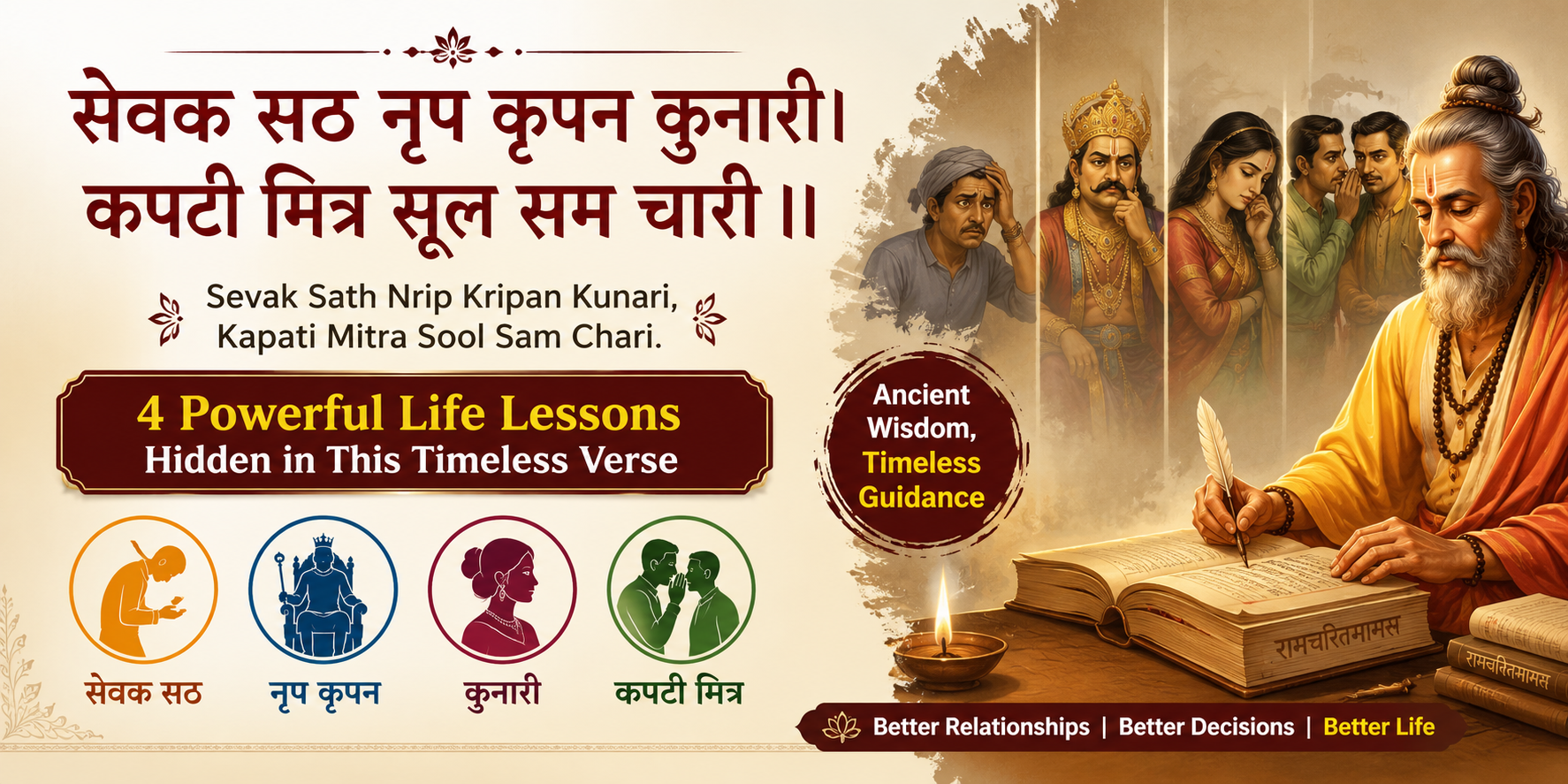
This famous verse from the Ramcharitmanas by Goswami Tulsidas contains profound wisdom about human relationships and leadership. Despite being written centuries ago, its message remains remarkably relevant in today’s world.
The verse warns us about four types of associations that can become sources of pain and suffering if not handled carefully. According to Tulsidas Ji, a foolish servant, a miserly king, an immoral spouse, and a deceitful friend are as painful as thorns.
In modern life, these four examples can be understood as symbols representing problematic relationships, unhealthy workplaces, poor leadership, and toxic social connections. Understanding this verse can help us make wiser decisions and avoid many difficulties in life.
The Complete Verse
सेवक सठ नृप कृपन कुनारी।
कपटी मित्र सूल सम चारी॥
हिंदी में अर्थ
गोस्वामी Tulsidas कहते हैं कि ये चार प्रकार के लोग जीवन में कांटे (शूल) के समान दुःख देने वाले होते हैं—
- सठ सेवक – मूर्ख या अविवेकी सेवक।
- कृपन नृप – कंजूस या संकीर्ण सोच वाला राजा/नेता।
- कुनारी – दुष्ट आचरण वाली या परिवार के हितों की उपेक्षा करने वाली पत्नी।
- कपटी मित्र – धोखा देने वाला मित्र।
ये चारों व्यक्ति समय आने पर परेशानी, हानि और दुःख का कारण बनते हैं, इसलिए इनके प्रति सावधान रहना चाहिए।
इस चौपाई में तुलसीदास जी बताते हैं कि मूर्ख सेवक, कंजूस शासक, दुष्ट आचरण वाली स्त्री और कपटी मित्र—ये चारों जीवन में कांटे के समान दुःख देने वाले होते हैं। इन पर भरोसा करने से व्यक्ति को समय-समय पर परेशानी, हानि और मानसिक कष्ट का सामना करना पड़ सकता है।
संदेश:
जीवन में सदैव बुद्धिमान सहयोगी, उदार नेता, सदाचारी परिवारजन और सच्चे मित्रों का साथ चुनना चाहिए, क्योंकि सही संगति ही सुख और सफलता का आधार है।
जीवन संदेश
- योग्य और समझदार सहयोगी चुनें।
- नेतृत्व में उदारता और न्याय आवश्यक है।
- परिवारिक संबंध विश्वास और मर्यादा पर आधारित होने चाहिए।
- मित्रता सदैव सच्चाई और निष्ठा पर आधारित होनी चाहिए।
English Meaning
This verse says that four kinds of people are as painful as a thorn in one’s life:
- A foolish or incompetent servant/employee.
- A miserly ruler or leader.
- A spouse of bad character who neglects family values.
- A deceitful friend.
Such people can create difficulties, losses, and suffering when they are relied upon. Therefore, one should be careful in choosing associates, leaders, life partners, and friends.
Key Lesson
Trust, competence, integrity, and good character are essential in relationships. People lacking these qualities can become a source of constant trouble, just as a thorn causes continuous pain.
Why This Verse Remains Relevant Today
Human nature has changed very little over the centuries. Technology, lifestyles, and societies have evolved, but the challenges people face in relationships remain similar.
People still struggle with:
- Unreliable employees
- Selfish leaders
- Broken relationships
- Fake friendships
- Lack of trust
- Poor decision-making
This is why the wisdom of Sevak Sath Nrip Kripan Kunari continues to guide people even today.
Understanding “Sevak Sath” – The Foolish Servant
Who Is a Foolish Servant?
A foolish servant is not simply someone with limited education. Instead, it refers to a person who lacks wisdom, responsibility, judgment, and integrity.
Such individuals:
- Ignore instructions
- Create unnecessary problems
- Make careless mistakes
- Refuse to learn
- Damage trust
Modern-Day Examples
Today, the term can apply to:
- Irresponsible employees
- Careless assistants
- Unreliable team members
- Negligent service providers
Why Is It Dangerous?
A wise worker can solve problems before they grow. A foolish worker often creates problems where none existed.
Business owners frequently suffer losses because of employees who:
- Fail to communicate properly
- Ignore important details
- Act without thinking
- Hide mistakes
The lesson is simple: competence and wisdom matter more than mere presence.
Understanding “Nrip Kripan” – The Miserly Ruler
What Does It Mean?
“Nrip” means king or ruler, while “Kripan” means miserly or excessively stingy.
A ruler who possesses wealth but refuses to use it for the welfare of others harms everyone under his leadership.
Modern Interpretation
In today’s world, the miserly ruler can represent:
- A selfish manager
- An unfair employer
- A leader who never supports employees
- A business owner who prioritizes profit over people
Characteristics of Miserly Leadership
Such leaders:
- Underpay workers
- Avoid investing in growth
- Ignore employee welfare
- Discourage innovation
- Create fear rather than trust
Impact on Organizations
When leaders become excessively focused on saving money, organizations suffer from:
- Low morale
- High employee turnover
- Poor customer service
- Lack of creativity
- Reduced productivity
Great leadership requires generosity, vision, and care for people.
Understanding “Kunari” – The Immoral Spouse
Meaning of Kunari
In the traditional context, “Kunari” refers to a woman with poor character.
However, in modern understanding, the lesson applies equally to any partner regardless of gender.
The core message concerns character rather than gender.
Signs of an Unhealthy Relationship
A relationship becomes harmful when it lacks:
- Honesty
- Loyalty
- Respect
- Commitment
- Trust
Why Character Matters
Physical attraction may start a relationship, but character sustains it.
Without character:
- Trust breaks down
- Conflicts increase
- Emotional pain grows
- Families suffer
A strong relationship is built on integrity, mutual respect, and shared values.
Understanding “Kapati Mitra” – The Deceitful Friend
Who Is a Deceitful Friend?
A deceitful friend pretends to care while secretly pursuing selfish interests.
Such individuals may:
- Speak sweetly in front of you
- Criticize you behind your back
- Use you for personal gain
- Disappear during difficult times
- Betray your trust
Why Fake Friends Are Dangerous
An enemy is visible.
A fake friend is hidden.
This makes deception far more dangerous because it often goes unnoticed until significant damage has occurred.
Modern Examples
Today, deceitful friendships can be found:
- In workplaces
- In business partnerships
- On social media
- In personal circles
Many people discover too late that someone they trusted never truly had their best interests at heart.
Why Tulsidas Compared These Four to a Thorn
The word “Sool” means thorn.
A thorn may appear small, but it causes continuous discomfort.
Similarly, these four types of relationships create ongoing pain:
- The foolish servant causes repeated mistakes.
- The miserly leader creates constant frustration.
- The immoral spouse destroys trust.
- The deceitful friend causes betrayal.
The pain is not always immediate. Often it grows gradually over time until it becomes difficult to ignore.
Leadership Lessons from Sevak Sath Nrip Kripan Kunari
This verse offers valuable lessons for modern leaders.
Hire Wisely
Do not choose people solely based on availability or low cost.
Look for:
- Character
- Responsibility
- Competence
- Integrity
Invest in People
Successful leaders understand that employees are assets, not expenses.
Supporting people creates:
- Loyalty
- Innovation
- Productivity
- Long-term success
Build Trust
Trust is the foundation of every successful team.
Without trust:
- Communication fails
- Collaboration suffers
- Results decline
Relationship Lessons from This Verse
Choose Character Over Appearance
Many people focus on external qualities while ignoring character.
Long-term happiness depends far more on:
- Honesty
- Loyalty
- Kindness
- Responsibility
Recognize Warning Signs Early
Toxic relationships rarely become harmful overnight.
Common warning signs include:
- Frequent lying
- Manipulation
- Broken promises
- Lack of accountability
Addressing issues early prevents greater pain later.
Friendship Lessons from Kapati Mitra
How to Identify Genuine Friends
True friends:
- Support your growth
- Celebrate your success
- Offer honest advice
- Remain loyal during challenges
How to Spot Fake Friends
Be cautious of people who:
- Gossip excessively
- Compete with you constantly
- Only contact you when they need something
- Become jealous of your achievements
Quality friendships are built on trust, not convenience.
Professional Lessons for Business Owners
Business owners can learn several important lessons from this verse.
Recruitment Matters
A single careless employee can create significant losses.
Therefore:
- Conduct proper interviews
- Verify references
- Assess character
- Provide training
Culture Starts at the Top
Employees often mirror leadership behavior.
Generous leaders create generous cultures.
Selfish leaders create selfish cultures.
Trust but Verify
Trust is important, but accountability is equally necessary.
Establish systems that encourage:
- Transparency
- Responsibility
- Continuous improvement
Psychological Wisdom Behind the Verse
Modern psychology supports many of the principles found in this teaching.
Research consistently shows that:
- Toxic relationships increase stress.
- Betrayal damages emotional well-being.
- Poor leadership lowers motivation.
- Trust improves performance and happiness.
The verse reflects timeless truths about human behavior and social dynamics.
How to Apply This Teaching in Daily Life
You can use this wisdom by asking four simple questions:
About Employees
Are the people around me responsible and trustworthy?
About Leaders
Do my leaders genuinely care about people?
About Relationships
Is my relationship based on honesty and mutual respect?
About Friends
Can I trust this person during difficult times?
These questions help identify potential problems before they become serious.
Common Misunderstandings About This Verse
It Is Not About Judging People
The verse is not encouraging harsh judgment.
Instead, it encourages discernment and wisdom.
It Is Not Limited to Ancient Society
The teaching applies to modern workplaces, friendships, marriages, and leadership situations.
It Focuses on Behavior, Not Status
The warning concerns harmful behaviors and character traits rather than social positions.
Timeless Relevance in the Modern World
Whether you are a student, entrepreneur, manager, employee, or parent, the lessons of Sevak Sath Nrip Kripan Kunari remain valuable.
The verse teaches us to:
- Choose relationships wisely
- Value character over appearances
- Practice ethical leadership
- Build trust
- Avoid deception
- Invest in people
These principles contribute to personal happiness, professional success, and stronger communities.
Conclusion
The powerful verse “Sevak Sath Nrip Kripan Kunari, Kapati Mitra Sool Sam Chari” offers timeless guidance for navigating relationships and leadership. Through a few simple words, Tulsidas Ji highlights four sources of recurring pain: the foolish servant, the miserly ruler, the immoral spouse, and the deceitful friend.
At its heart, the teaching is about wisdom, trust, character, and discernment. By choosing trustworthy people, cultivating ethical leadership, nurturing healthy relationships, and recognizing deception early, we can avoid many of life’s unnecessary struggles.
Even centuries later, this verse remains a practical guide for building a more successful, peaceful, and meaningful life.
FAQs
1. What is the meaning of Sevak Sath Nrip Kripan Kunari?
It means that a foolish servant, a miserly ruler, an immoral spouse, and a deceitful friend are as painful as thorns.
2. Who wrote this verse?
The verse was written by Goswami Tulsidas in the Ramcharitmanas.
3. What does Kapati Mitra mean?
Kapati Mitra means a deceitful or hypocritical friend.
4. Why is a foolish servant considered dangerous?
Because poor judgment and negligence can create continuous problems.
5. What is the lesson of Nrip Kripan?
Leaders should not be selfish or excessively stingy.
6. Is this verse relevant today?
Yes, it applies to modern relationships, workplaces, and leadership.
7. What does Sool mean?
Sool means thorn, symbolizing continuous pain.
8. Does this verse apply to business management?
Yes, especially regarding hiring, leadership, and trust.
9. What is the main message of the verse?
Choose relationships wisely and value character above all else.
10. Why is this verse still popular?
Because its lessons remain practical and relevant across generations.
