

- Your cart is empty
- Continue Shopping
Nainam Chindanti Shastrani – Bhagavad Gita Shloka 2-23 – Chapter 2 Verse 23 Meaning, Explanation & Life Lessons

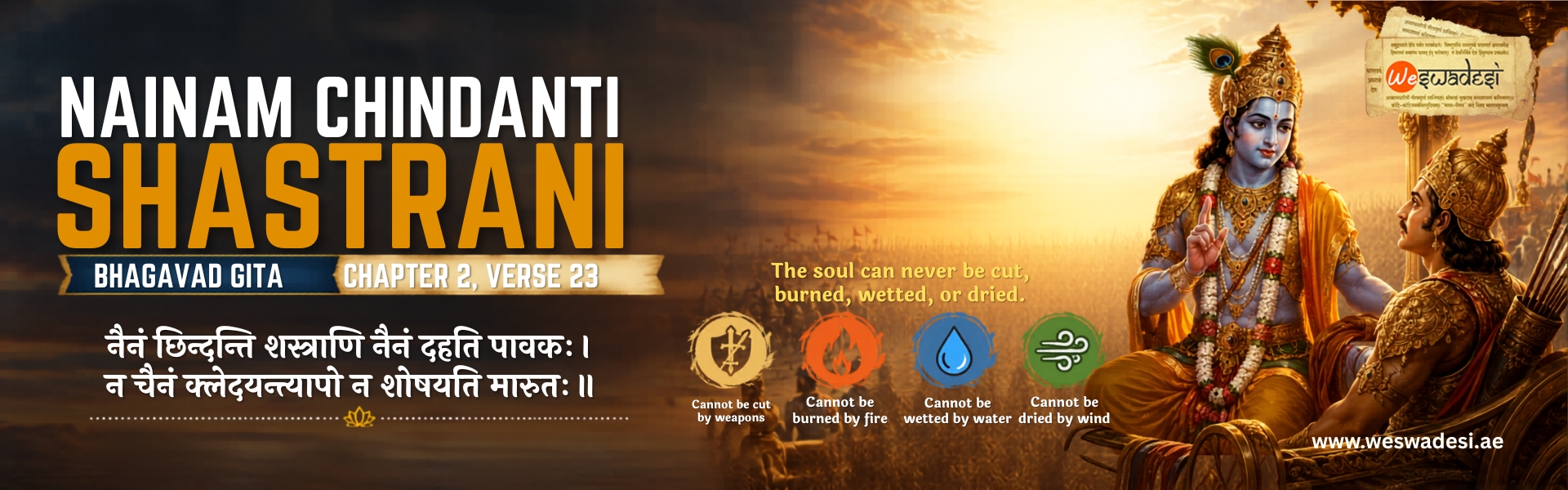
The Bhagavad Gita is one of the greatest spiritual scriptures ever written. Every verse of the Gita contains timeless wisdom that helps people handle fear, stress, confusion, and the challenges of life. Among its most inspiring verses is Bhagavad Gita Chapter 2 Verse 23, beginning with the famous words “Nainam Chindanti Shastrani”.
This verse teaches a powerful truth about the eternal nature of the soul. It explains that the soul can never be destroyed by weapons, fire, water, or air. The body may perish, but the soul remains immortal forever.
In today’s fast-moving and stressful world, this verse provides strength, courage, peace of mind, and spiritual clarity. Whether someone is facing fear, loss, anxiety, or uncertainty, the wisdom of this verse can help transform their perspective toward life and death.
In this detailed guide, you will learn:
- The Sanskrit shloka
- Word-by-word meaning
- Simple English explanation
- Spiritual significance
- Life lessons
- Practical daily applications
- Importance in modern life
- Frequently asked questions
Let us understand the deeper meaning of this powerful Bhagavad Gita verse.
Bhagavad Gita Chapter 2 Verse 23 Sanskrit
नैनं छिन्दन्ति शस्त्राणि नैनं दहति पावकः।
न चैनं क्लेदयन्त्यापो न शोषयति मारुतः॥
Transliteration
Nainam chindanti shastrani
Nainam dahati pavakah
Na chainam kledayantyapo
Na shoshayati marutah
Meaning of Nainam Chindanti Shastrani
Simple English Meaning
The soul can never be cut by weapons, burned by fire, wetted by water, or dried by the wind.
Deeper Meaning
Lord Krishna explains to Arjuna that the soul is eternal, indestructible, and beyond physical harm. While the body is temporary and perishable, the soul remains untouched by material elements.
This teaching removes fear of death and helps people understand their true spiritual identity.
Word-by-Word Meaning
| Sanskrit Word | Meaning |
|---|---|
| न | Not |
| एनम् | This soul |
| छिन्दन्ति | Can cut |
| शस्त्राणि | Weapons |
| दहति | Burns |
| पावकः | Fire |
| क्लेदयन्ति | Wets |
| आपः | Water |
| शोषयति | Dries |
| मारुतः | Wind |
Context of Bhagavad Gita Chapter 2 Verse 23
This verse appears in Chapter 2 of the Bhagavad Gita during the conversation between Lord Krishna and Arjuna on the battlefield of Kurukshetra.
Arjuna becomes emotionally weak and refuses to fight because he fears the death of his relatives, teachers, and loved ones. To remove his confusion, Lord Krishna explains the eternal nature of the soul.
Krishna teaches that:
- The body is temporary
- The soul is immortal
- Death is only a change of body
- No material force can destroy the soul
This wisdom helps Arjuna rise above fear and fulfill his duty with courage and clarity.
Spiritual Meaning of Nainam Chindanti Shastrani
The spiritual message of this verse is profound. Most human suffering comes from identifying only with the physical body. People fear aging, pain, separation, and death because they believe the body is the self.
Lord Krishna reveals a higher truth:
“You are not the body; you are the eternal soul.”
The soul:
- Never takes birth
- Never dies
- Cannot be harmed
- Exists forever
This realization brings inner freedom and spiritual peace.
Why This Verse Is So Powerful
The verse “Nainam Chindanti Shastrani” is considered one of the most powerful teachings in the Bhagavad Gita because it directly addresses humanity’s greatest fear — death.
It teaches:
- Fearlessness
- Inner strength
- Emotional stability
- Spiritual awareness
- Detachment from temporary problems
When people understand that the soul is eternal, they begin to face life with more confidence and peace.
Life Lessons from Nainam Chindanti Shastrani
1. The Soul Is Eternal
The biggest lesson from this verse is that our true identity is spiritual, not physical.
Bodies change with time, but the soul remains unchanged.
This understanding helps people rise above fear and sadness.
2. Do Not Fear Death
Death is one of the greatest fears in human life. Lord Krishna explains that death is only the destruction of the body, not the soul.
Just as a person changes old clothes for new ones, the soul changes bodies.
This wisdom reduces fear and helps people live more courageously.
3. Material Problems Are Temporary
Pain, failure, stress, and challenges are temporary experiences related to the body and mind.
The soul remains untouched.
This perspective helps people stay calm during difficult times.
4. Inner Strength Comes from Spiritual Knowledge
True confidence does not come from money, status, or power. It comes from understanding one’s spiritual nature.
People who know the soul is eternal become mentally stronger and emotionally balanced.
5. Detachment Brings Peace
Attachment to temporary things creates suffering.
The Bhagavad Gita teaches balanced detachment — performing duties sincerely while understanding that everything material is temporary.
This mindset creates peace and stability.
6. Courage Is Born from Wisdom
Arjuna became fearless after hearing Krishna’s teachings.
Similarly, spiritual wisdom helps people overcome anxiety, confusion, and fear.
Importance of Bhagavad Gita Chapter 2 Verse 23 in Daily Life
This verse is not only spiritual philosophy; it is practical wisdom for modern life.
During Stress and Anxiety
When people remember that the soul is eternal, temporary problems seem smaller.
This reduces stress and mental pressure.
During Loss or Grief
The verse gives comfort by teaching that the soul never dies.
It helps people handle emotional pain with spiritual understanding.
During Failure
Failures become easier to accept when life is viewed from a spiritual perspective.
People learn to keep moving forward with courage.
During Difficult Decisions
Spiritual clarity helps people make wiser and calmer decisions.
How to Apply This Verse in Everyday Life
Practice Self-Reflection
Spend a few minutes daily reflecting on the eternal nature of the soul.
Read Bhagavad Gita Regularly
Reading even one verse daily can transform thinking and improve mental clarity.
Meditate on the Soul
Meditation helps disconnect from temporary worries and connect with inner peace.
Focus on Duties
Like Arjuna, perform responsibilities sincerely without fear.
Develop Spiritual Awareness
Understand that material success alone cannot bring lasting happiness.
Psychological Benefits of Understanding This Verse
Modern psychology also recognizes the importance of mindset and perspective.
This verse helps develop:
- Emotional resilience
- Mental stability
- Fear management
- Positive thinking
- Acceptance of change
People who think spiritually often handle stress better than those who focus only on material concerns.
Nainam Chindanti Shastrani and Modern Society
In today’s world, people constantly experience:
- Anxiety
- Depression
- Competition
- Fear of failure
- Fear of uncertainty
Bhagavad Gita Chapter 2 Verse 23 provides timeless guidance that helps people remain mentally strong.
The verse teaches that true identity is beyond physical appearance, success, or social status.
This understanding creates self-confidence and inner peace.
Scientific and Philosophical Perspective
While science studies the physical body, spiritual philosophy studies consciousness and existence.
The Bhagavad Gita presents the soul as eternal consciousness that exists beyond the material body.
Many philosophers and spiritual thinkers across history have admired this wisdom because it addresses fundamental questions about life and death.
Why Youth Should Read This Verse
Young people today face immense pressure related to careers, studies, relationships, and social expectations.
This verse teaches:
- Confidence
- Fearlessness
- Purpose
- Emotional balance
- Spiritual awareness
It helps young minds develop a healthier and stronger outlook on life.
Nainam Chindanti Shastrani for Mental Peace
One of the greatest benefits of this verse is mental peace.
People suffer when they become overly attached to temporary situations.
Krishna reminds us that the soul is untouched by external events.
This understanding creates calmness even during chaos.
Practical Examples from Real Life
Example 1: Facing Failure
A student fails an exam and feels hopeless.
This verse teaches that failure is temporary and does not define the soul or true identity.
Example 2: Handling Loss
Someone loses a loved one and experiences grief.
The verse reminds us that the soul continues its journey beyond the body.
Example 3: Overcoming Fear
A person afraid of uncertainty gains courage by understanding that the soul is eternal and indestructible.
Key Teachings of Bhagavad Gita Chapter 2 Verse 23
- The soul is eternal
- The body is temporary
- Death is not the end
- Fear comes from ignorance
- Spiritual wisdom creates peace
- Inner strength comes from self-realization
Inspirational Message from This Verse
No external force can destroy the true self.
Weapons cannot cut the soul. Fire cannot burn it. Water cannot wet it. Wind cannot dry it.
The soul is beyond all material limitations.
This realization gives tremendous courage and peace in life.
Simple Explanation for Beginners
If you are new to the Bhagavad Gita, this verse can be understood in a very simple way:
- Your body changes with time
- Your thoughts and emotions change
- Situations change
- But your soul remains eternal
Krishna teaches us not to live in fear because our true existence is permanent.
Difference Between Body and Soul
| Body | Soul |
|---|---|
| Temporary | Eternal |
| Can be destroyed | Cannot be destroyed |
| Changes with age | Never changes |
| Physical | Spiritual |
| Limited | Infinite |
Understanding this difference is the foundation of spiritual wisdom.
Lessons for Spiritual Growth
This verse encourages people to:
- Explore spirituality
- Practice meditation
- Develop inner awareness
- Focus on higher purpose
- Reduce attachment to temporary things
These habits improve both spiritual and emotional well-being.
Common Misunderstandings About This Verse
Misunderstanding 1: It Promotes Detachment from Life
The verse does not teach escaping responsibilities.
Krishna actually encourages Arjuna to perform his duty courageously.
Misunderstanding 2: It Ignores Emotions
The Gita does not deny emotions. It teaches balance and wisdom while dealing with emotions.
Misunderstanding 3: Spirituality Means Weakness
The Bhagavad Gita teaches strength, courage, and fearless action.
What We Can Learn from Lord Krishna’s Teaching
Lord Krishna’s message is timeless:
- Know your true self
- Rise above fear
- Stay calm during challenges
- Perform your duties sincerely
- Develop spiritual wisdom
These teachings remain relevant even today.
Frequently Asked Questions (FAQs)
What is the meaning of Nainam Chindanti Shastrani?
It means the soul cannot be destroyed by weapons, fire, water, or wind because it is eternal and indestructible.
Which chapter and verse is Nainam Chindanti Shastrani?
It is Bhagavad Gita Chapter 2 Verse 23.
What does this verse teach us?
This verse teaches that the soul is immortal and beyond physical destruction.
Why is this verse important?
It helps people overcome fear, stress, grief, and attachment by understanding the eternal nature of the soul.
How can this verse help in daily life?
It provides mental peace, emotional strength, courage, and spiritual clarity during difficult situations.
What is the spiritual meaning of this verse?
The spiritual meaning is that our true identity is the eternal soul, not the temporary physical body.
Conclusion
The verse “Nainam Chindanti Shastrani” from Bhagavad Gita Chapter 2 Verse 23 is one of the most inspiring spiritual teachings ever spoken.
It reminds humanity that the soul is eternal, indestructible, and beyond material harm. Weapons cannot destroy it, fire cannot burn it, water cannot wet it, and wind cannot dry it.
This wisdom helps people:
- Overcome fear
- Handle stress
- Face challenges courageously
- Find inner peace
- Develop spiritual understanding
In a world full of uncertainty and anxiety, the teachings of the Bhagavad Gita continue to guide millions toward peace, strength, and purpose.
If we truly understand and apply this verse in daily life, we can live with greater courage, balance, and spiritual awareness.
