

- Your cart is empty
- Continue Shopping
Lord Krishna: The Divine Guide, Supreme Being & Eternal Inspiration

Introduction
Among the most beloved and revered figures in Hinduism, Krishna stands as a symbol of divine love, wisdom, and righteousness. Worshipped as the eighth avatar of Vishnu, and in many traditions as the Supreme Being himself, Krishna’s life and teachings transcend time, culture, and geography.
From his playful childhood in Vrindavan to his profound discourse in the Bhagavad Gita, Krishna embodies the perfect balance of joy, duty, compassion, and spiritual enlightenment. His influence continues to shape spirituality, art, music, and daily life for millions around the world—including devotees in the UAE.
Key Facts About Lord Krishna
Parents: Vasudeva and Devaki (raised by Nanda and Yashoda)
- Consorts: Rukmini, Satyabhama, and Radha (in devotional traditions)
- Primary Scriptures: Mahabharata, Bhagavata Purana, Harivamsha
- Sacred Teaching: Bhagavad Gita
- Birthplace: Mathura, India
- Associated Festival: Janmashtami
Birth and Early Life of Krishna
Lord Krishna’s birth is one of the most celebrated divine events in Hindu tradition. Born in Mathura to Devaki and Vasudeva, his life began under threat from the tyrant King Kamsa, who feared a prophecy predicting his death at Krishna’s hands.
To protect the newborn, Vasudeva carried Krishna across the Yamuna River in a miraculous journey to Gokula, where he was raised by Nanda and Yashoda. This early phase of Krishna’s life is filled with enchanting stories that symbolize divine protection and innocence.
बाल लीलाएँ (Childhood Leelas)
Krishna’s childhood is known for his charming and mischievous acts:
- Stealing butter (Makhan Chor)
- Playing pranks on villagers
- Dancing on the serpent Kaliya
- Lifting Govardhan Hill to protect villagers
These stories are not just folklore—they represent deeper spiritual truths about divine love, protection, and the victory of good over evil.
Krishna and Divine Love: The Story of Radha
One of the most profound aspects of Krishna’s life is his relationship with Radha. Their bond is not merely romantic—it is symbolic of the soul’s longing for union with the divine.
In the forests of Vrindavan, Krishna’s flute enchanted the gopis (cowherd maidens), drawing them into a state of pure devotion. Among them, Radha’s love is considered the highest form of Bhakti (devotion).
This divine love has inspired:
- Bhakti poetry
- Classical dance forms like Kathak
- Devotional music and kirtans
Krishna-Radha represents eternal love beyond physical existence—a connection between the human soul and the Supreme.
Krishna’s Role in the Mahabharata
Krishna reappears in adulthood as a wise statesman and strategist in the Mahabharata. He plays a crucial role in guiding the Pandavas, especially Arjuna.
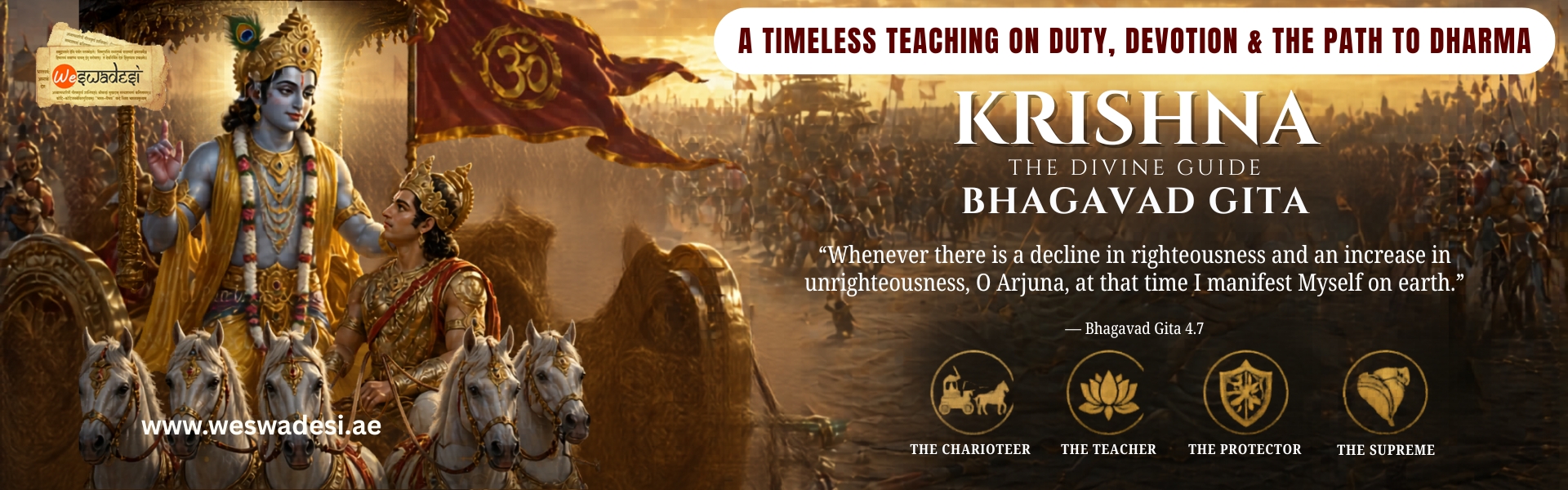
Although he chooses not to fight in the war, Krishna becomes Arjuna’s charioteer—symbolizing guidance and humility.
The Bhagavad Gita: Eternal Wisdom
On the battlefield of Kurukshetra, when Arjuna is overcome with doubt and moral confusion, Krishna delivers the Bhagavad Gita—one of the most important spiritual texts in the world.
Key teachings include:
- Dharma (Duty): Perform your duty without attachment
- Karma Yoga: Action without expectation of results
- Bhakti Yoga: Devotion as a path to liberation
- Jnana Yoga: Knowledge of the self and universe
The Gita teaches that the soul is eternal and that one must act with righteousness and surrender to the divine.
Krishna as a Supreme Philosopher
Krishna’s teachings go beyond religion—they offer a universal philosophy for life.
Core Life Lessons from Krishna
- Stay calm in chaos
- Focus on duty, not results
- Control desires and ego
- Practice devotion and gratitude
- Accept change as part of life
These teachings are highly relevant even today, especially in modern fast-paced life.
Krishna’s Kingdom: Dwarka
After the Mahabharata war, Krishna established his kingdom in Dwarka, which became a center of prosperity and dharma.
Dwarka today is one of the Char Dham pilgrimage sites, attracting millions of devotees every year.
Death and Legacy of Krishna
Krishna’s earthly life ended in a symbolic and peaceful manner. A hunter named Jara mistakenly shot an arrow at his foot—his only vulnerable part.
This marked:
- The end of Dvapara Yuga
- The beginning of Kali Yuga
Despite his departure, Krishna’s legacy continues through:
- Scriptures
- Devotional traditions
- Temples worldwide
Cultural and Spiritual Impact
Krishna’s influence is deeply embedded in Indian and global culture.
In Religion & Devotion
- Central figure in Vaishnavism
- Worshipped in temples across India and abroad
- Promoted globally by ISKCON
In Arts & Culture
- Classical dances (Bharatanatyam, Kathak)
- Music (bhajans, kirtans)
- Paintings and sculptures
In Modern Media
- TV series and movies
- Animated shows like Little Krishna
- Books and spiritual literature
Krishna Worship in UAE
For devotees living in the UAE, Krishna worship remains strong and vibrant.
Popular practices include:
- Celebrating Janmashtami with devotion
- Daily chanting of Hare Krishna mantra
- Reading Bhagavad Gita
- Performing home पूजा (puja)
Websites like weswadesi.ae provide essential पूजा items, idols, and spiritual books, making it easier for devotees abroad to stay connected with their roots.
Why Krishna Still Matters Today
In today’s world of stress, confusion, and materialism, Krishna’s teachings offer clarity and peace.
He teaches us:
- How to live with purpose
- How to manage emotions
- How to stay spiritually grounded
Krishna is not just a deity—he is a guide, mentor, and eternal friend.
Conclusion
Lord Krishna’s life is a perfect blend of joy, wisdom, love, and duty. From his playful childhood to his profound teachings in the Bhagavad Gita, he continues to inspire millions across generations.
Whether you seek spiritual growth, emotional balance, or life guidance, Krishna’s teachings remain timeless and universal.
FAQs About Lord Krishna
1. Who is Lord Krishna?
Lord Krishna is the eighth avatar of Vishnu and a central deity in Hinduism, known for his teachings in the Bhagavad Gita and his divine life stories.
2. Why is Krishna called the Supreme Being?
In many traditions, Krishna is considered the ultimate reality (Parabrahman) because he represents the source of all creation and divine consciousness.
3. What is the main message of the Bhagavad Gita?
The Bhagavad Gita teaches performing one’s duty without attachment, devotion to God, and understanding the eternal nature of the soul.
4. Why is Radha important in Krishna’s life?
Radha symbolizes pure devotion and unconditional love for the divine, representing the soul’s connection with God.
5. How is Janmashtami celebrated?
Janmashtami is celebrated with fasting, पूजा, bhajans, midnight celebrations, and reenactments of Krishna’s birth and childhood.
