

- Your cart is empty
- Continue Shopping
Bhagavad Gita 9.26 Meaning, Explanation, and Life Lessons

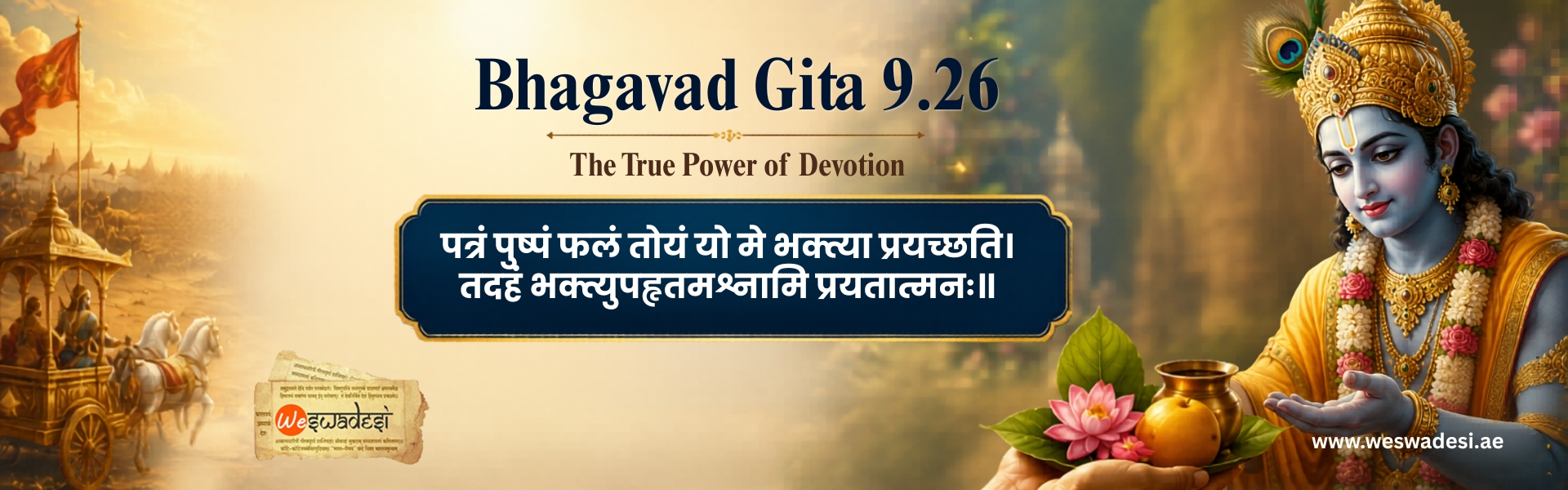
The Bhagavad Gita is one of the greatest spiritual scriptures in the world. Every verse contains deep wisdom that guides human beings toward peace, devotion, and self-realization. Among its many powerful teachings, Bhagavad Gita Chapter 9 Verse 26 is one of the most beautiful and heart-touching shlokas about devotion and pure love for God.
The verse teaches that Lord Krishna does not seek expensive offerings, wealth, or grand rituals. Instead, He accepts even a simple leaf, flower, fruit, or water when it is offered with true devotion and a pure heart. This message gives hope and spiritual strength to everyone, regardless of status, wealth, or background.
The verse is:
पत्रं पुष्पं फलं तोयं यो मे भक्त्या प्रयच्छति।
तदहं भक्त्युपहृतमश्नामि प्रयतात्मनः॥
This divine teaching reminds us that devotion matters more than material possessions. A small offering made with love becomes spiritually priceless in the eyes of God.
In this detailed article, we will explore the Bhagavad Gita 9.26 meaning, word-by-word explanation, spiritual significance, life lessons, importance in daily life, practical examples, and how this verse can transform our relationship with God.
Bhagavad Gita 9.26 Sanskrit Verse
पत्रं पुष्पं फलं तोयं यो मे भक्त्या प्रयच्छति।
तदहं भक्त्युपहृतमश्नामि प्रयतात्मनः॥
Transliteration
Patram Pushpam Phalam Toyam
Yo Me Bhaktya Prayacchati
Tadaham Bhaktyupahritam
Ashnami Prayatatmanah
Bhagavad Gita 9.26 Meaning in English
Lord Krishna says:
“Whoever offers Me with devotion a leaf, a flower, a fruit, or water, I accept that loving offering from the pure-hearted soul.”
This verse beautifully explains that God values devotion more than expensive rituals or material wealth.
Bhagavad Gita 9.26 Meaning in Hindi
भगवान श्रीकृष्ण कहते हैं:
“जो भक्त मुझे प्रेम और भक्ति से एक पत्ता, फूल, फल या जल भी अर्पित करता है, मैं उस शुद्ध मन वाले भक्त की प्रेमपूर्ण भेंट को स्वीकार करता हूँ।”
इस श्लोक का मुख्य संदेश यह है कि भगवान को वस्तु की कीमत नहीं, बल्कि भक्त की भावना प्रिय होती है।
Word-by-Word Meaning of Bhagavad Gita 9.26
Patram
Leaf
Pushpam
Flower
Phalam
Fruit
Toyam
Water
Yo
Whoever
Me
To Me
Bhaktya
With devotion
Prayacchati
Offers
Tad Aham
That I
Bhaktyupahritam
Offered with devotion
Ashnami
Accept
Prayatatmanah
From a pure-hearted person
Why Bhagavad Gita 9.26 Is So Important
Bhagavad Gita 9.26 is one of the most loved verses because it removes the misunderstanding that worship requires wealth, luxury, or complicated rituals.
Lord Krishna clearly says:
- Devotion is more important than money
- Purity of heart matters more than expensive offerings
- Every person can connect with God
- God accepts sincere love from everyone equally
This teaching makes spirituality accessible to all human beings.
Whether someone is rich or poor, educated or uneducated, powerful or ordinary — everyone can worship God through love and devotion.
The Deeper Spiritual Meaning of Bhagavad Gita 9.26
At a deeper level, this verse teaches surrender, humility, and unconditional love.
Krishna is the Supreme Lord who owns the entire universe. He does not need fruits, flowers, or water from humans. Yet He lovingly accepts simple offerings because He values the emotion behind them.
The real offering is not the object.
The real offering is:
- Faith
- Love
- Surrender
- Purity
- Gratitude
When a devotee offers something with complete devotion, the heart becomes spiritually connected to God.
This is the essence of Bhakti Yoga.
Bhagavad Gita 9.26 and Bhakti Yoga
Bhakti Yoga means the path of devotion.
In Chapter 9 of the Bhagavad Gita, Lord Krishna explains the greatness of pure devotion. Verse 9.26 is considered one of the foundational teachings of Bhakti Yoga because it highlights the simplicity of true worship.
Bhakti is not about:
- Showing off spirituality
- Performing rituals for social status
- Expensive ceremonies without devotion
True Bhakti means:
- Remembering God with love
- Offering actions with sincerity
- Serving others selflessly
- Maintaining purity in thoughts and actions
This verse teaches that even the smallest offering becomes divine when offered with love.
Simple Examples to Understand Bhagavad Gita 9.26
A Child Offering a Flower
Imagine a small child giving a flower to their mother with love. The flower may not be expensive, but the mother treasures it because of the child’s affection.
Similarly, Krishna values devotion more than material value.
A Poor Devotee Offering Water
A poor devotee may not have riches to offer in worship. But if they offer water with genuine faith and love, Krishna happily accepts it.
Mechanical Worship vs Loving Devotion
Someone may perform huge rituals without devotion, while another person sincerely chants God’s name with tears of love.
According to this verse, sincere devotion is spiritually greater.
What Does “Pure Heart” Mean in Bhagavad Gita 9.26?
The verse uses the word “Prayatatmanah,” meaning a disciplined and pure-hearted person.
A pure heart includes:
- Honest intentions
- Freedom from selfishness
- Love for God
- Humility
- Inner cleanliness
- Gratitude
- Faith
Krishna is pleased not by external appearances but by inner sincerity.
Life Lessons from Bhagavad Gita 9.26
1. God Looks at Intentions
In modern life, people often judge others based on money, status, and appearance. But God looks at the heart.
This verse teaches us to value sincerity over external success.
2. Simplicity Has Great Spiritual Power
Spirituality does not need luxury. Even simple prayers done with devotion can bring inner peace and divine blessings.
Simple acts like:
- Lighting a diya
- Offering water
- Chanting Krishna’s name
- Helping others
can become spiritual worship.
3. Everyone Can Worship God
This verse removes barriers in spirituality.
You do not need:
- Wealth
- Social status
- Special background
Anyone can connect with God through devotion.
4. Devotion Is Greater Than Material Wealth
A small offering with love is spiritually greater than a costly offering made with ego.
This lesson encourages humility and genuine faith.
5. Purity of Heart Brings Peace
When devotion becomes pure, the mind becomes peaceful.
Negative emotions like:
- Jealousy
- Anger
- Ego
- Greed
begin to reduce naturally.
Bhagavad Gita 9.26 in Daily Life
Many people think spirituality belongs only in temples or religious rituals. But Krishna’s teaching can be practiced daily.
Morning Prayer
Offer a simple prayer with gratitude before starting the day.
Before Eating Food
Offer food mentally to God before eating.
Helping Others
Serving people with kindness becomes an offering to Krishna.
Honest Work
Doing work sincerely and ethically is also devotion.
Chanting God’s Name
Even remembering Krishna with love during busy life is spiritual worship.
The Symbolism of Leaf, Flower, Fruit, and Water
The items mentioned in the verse carry symbolic meaning.
Leaf (Patram)
Represents simplicity and humility.
Flower (Pushpam)
Represents beauty, purity, and love.
Fruit (Phalam)
Represents the results of actions and surrendering outcomes to God.
Water (Toyam)
Represents purity and life itself.
Together, they symbolize offering every aspect of life to God.
Importance of Devotion in Hinduism
Devotion has always been central in Sanatan Dharma.
Great devotees like:
- Meera Bai
- Hanuman
- Prahlada
- Sudama
- Radha
showed that love for God is more powerful than worldly wealth.
Bhagavad Gita 9.26 reflects this timeless spiritual truth.
Sudama and Krishna: Perfect Example of This Verse
The story of Sudama beautifully reflects Bhagavad Gita 9.26.
Sudama was poor and had nothing valuable to offer Krishna except beaten rice. But Krishna accepted it with immense love because it was offered with devotion.
This story teaches:
- God values love more than luxury
- Pure devotion attracts divine grace
- True friendship and devotion are eternal
How to Practice Bhagavad Gita 9.26 Today
1. Offer Food Before Eating
Mentally dedicate food to God.
2. Worship with Love
Focus on devotion rather than showmanship.
3. Maintain Inner Purity
Keep thoughts and actions positive.
4. Practice Gratitude
Thank God daily for blessings.
5. Serve Humanity
Helping others selflessly is also divine worship.
Spiritual Benefits of Following Bhagavad Gita 9.26
People who practice this teaching may experience:
- Inner peace
- Emotional stability
- Spiritual connection
- Reduced stress
- Greater gratitude
- Strong faith
- Positive mindset
Devotion purifies the mind and brings spiritual happiness.
Bhagavad Gita 9.26 and Modern Stressful Life
Modern life is full of pressure, competition, and anxiety.
Many people feel spiritually disconnected because they think worship requires time, money, or complicated rituals.
But Krishna’s message is simple:
- Offer love
- Remember God
- Stay sincere
- Keep your heart pure
Even small moments of devotion can transform mental peace and emotional well-being.
Common Misunderstandings About Worship
Myth 1: Expensive Rituals Are Necessary
Krishna clearly says devotion matters most.
Myth 2: Only Priests Can Worship Properly
Every human being can worship God sincerely.
Myth 3: God Needs Material Gifts
God does not need anything material. Devotion is the true offering.
Scientific and Psychological Perspective
Modern psychology also supports practices like:
- Gratitude
- Prayer
- Meditation
- Emotional sincerity
These practices help reduce stress and improve emotional balance.
Bhagavad Gita 9.26 encourages emotional purity and spiritual mindfulness, which positively affect mental health.
Universal Message of Bhagavad Gita 9.26
This verse is not limited to one religion or culture.
Its universal message is:
- Love matters more than possessions
- Purity matters more than appearance
- Intention matters more than ritual
Anyone can apply these teachings in life.
Best Time to Chant Bhagavad Gita 9.26
You can chant this verse:
- During morning prayer
- Before meals
- During meditation
- In temple worship
- Before sleeping
- During stressful situations
Regular chanting increases spiritual positivity and devotion.
Easy Daily Practice Inspired by Bhagavad Gita 9.26
Here is a simple daily spiritual routine:
Morning
Offer gratitude and chant Krishna’s name.
Afternoon
Help someone selflessly.
Evening
Light a diya and offer water or flowers.
Night
Thank God before sleeping.
Simple devotion creates deep spiritual transformation over time.
Why This Verse Is Loved Worldwide
Bhagavad Gita 9.26 is loved because:
- It gives hope to everyone
- It teaches equality
- It emphasizes love over wealth
- It makes spirituality simple
- It connects directly with the heart
This verse beautifully represents Krishna’s compassion and unconditional acceptance.
Conclusion
Bhagavad Gita 9.26 is one of the most beautiful teachings on devotion and divine love. Lord Krishna teaches that He does not seek expensive offerings or grand rituals. What truly matters is pure devotion from the heart.
A leaf, flower, fruit, or water offered with sincerity becomes spiritually valuable because it carries love and faith.
This timeless verse reminds us that:
- God values intention over wealth
- Devotion is open to everyone
- Simplicity has spiritual greatness
- Pure love connects the soul with God
In today’s busy and stressful world, Bhagavad Gita 9.26 offers a simple yet powerful spiritual path — worship with love, live with gratitude, and keep your heart pure.
Frequently Asked Questions (FAQs)
What is the meaning of Bhagavad Gita 9.26?
Bhagavad Gita 9.26 means that Lord Krishna accepts even a simple offering like a leaf, flower, fruit, or water when it is offered with pure devotion and love.
What is the message of Patram Pushpam Phalam Toyam?
The message is that devotion matters more than expensive offerings. God values sincerity and love rather than material wealth.
Why is Bhagavad Gita 9.26 important?
This verse teaches equality in devotion and shows that anyone can worship God regardless of wealth or social status.
What does Krishna teach in Bhagavad Gita 9.26?
Krishna teaches that pure-hearted devotion is the highest form of worship and that sincere offerings are accepted by Him with love.
Can poor people worship God according to Bhagavad Gita 9.26?
Yes. This verse clearly says that even simple offerings made with devotion are accepted by God.
What is Bhakti according to Bhagavad Gita 9.26?
Bhakti means loving devotion toward God with sincerity, humility, and faith.
How can I apply Bhagavad Gita 9.26 in daily life?
You can apply it by offering gratitude, praying sincerely, helping others, and remembering God with devotion every day.
What are the benefits of chanting Bhagavad Gita 9.26?
Regular chanting can bring peace, positivity, devotion, emotional balance, and spiritual growth.
Is Bhagavad Gita 9.26 related to Bhakti Yoga?
Yes. This verse is one of the core teachings of Bhakti Yoga, which focuses on devotion and love for God.
What does God really want according to Bhagavad Gita 9.26?
According to this verse, God wants pure devotion, love, sincerity, and a clean heart more than material
