
- Your cart is empty
- Continue Shopping
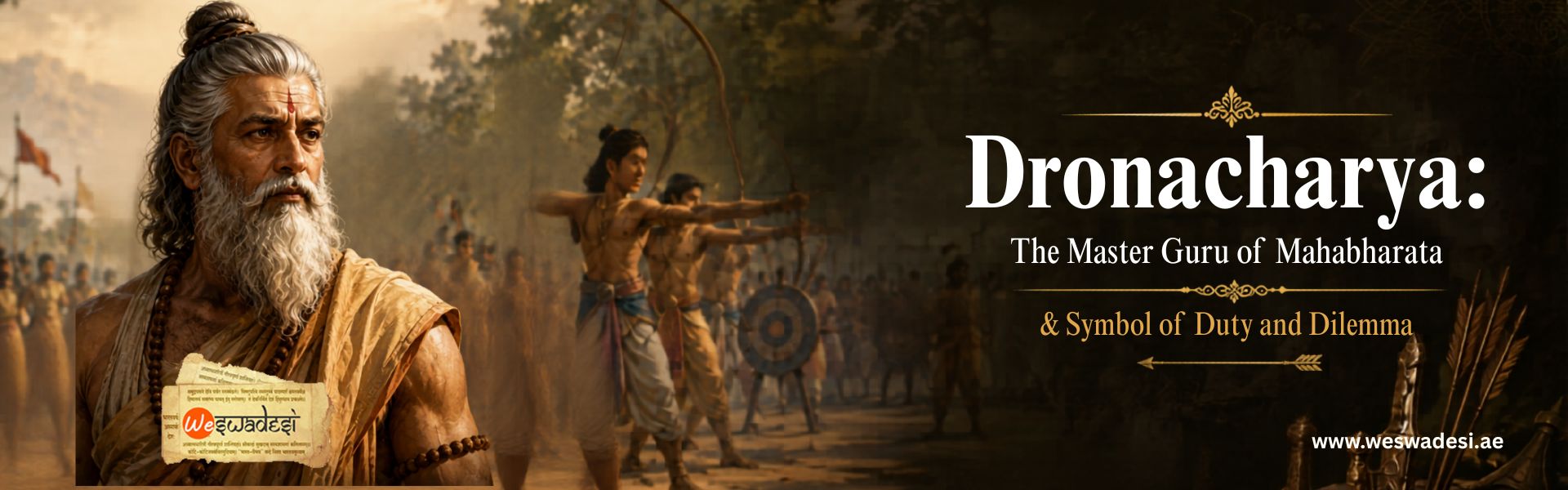
Dronacharya: The Master Guru of Mahabharata & Symbol of Duty and Dilemma

Introduction
In the vast and intricate narrative of the Mahabharata, Drona—widely known as Dronacharya—stands as one of the most respected yet morally complex figures. Revered as the guru of both the Pandavas and Kauravas, Drona was a master of warfare, divine weapons, and discipline.
His life, deeply intertwined with the events leading to the Kurukshetra War—the setting of the Bhagavad Gita—represents the eternal struggle between duty, loyalty, and righteousness.
Dronacharya is not just a teacher of warfare; he is a symbol of knowledge, authority, and the consequences of moral compromise.
Key Facts About Dronacharya
- Full Name: Droṇa (Dronacharya)
- Father: Sage Bharadvaja
- Wife: Kripi
- Son: Ashwatthama
- Role: Royal teacher of Kuru princes
- Famous Student: Arjuna
- Death: Slain by Dhrishtadyumna in Kurukshetra War
Birth and Origins
Drona’s birth itself is unique and symbolic.
According to legend:
- He was born from a vessel (called a droṇa)
- Hence, he was named Drona
As the son of Sage Bharadvaja, Drona was raised in a spiritually rich environment, gaining knowledge in:
- Scriptures
- Warfare
- Divine sciences
Despite his knowledge, he lived a life of poverty in his early years.
Training Under Parashurama
Drona’s destiny changed when he became a student of the legendary warrior-sage Parashurama.
Under his guidance, Drona mastered:
- Advanced warfare techniques
- Use of divine weapons (astras)
- Military strategy
Parashurama, having renounced his possessions, passed on his knowledge and weapons to Drona—making him one of the most powerful warriors of his time.
Struggles and Journey to Hastinapura
Despite his immense knowledge, Drona struggled financially.
A turning point came when:
- He sought help from his childhood friend Drupada (now a king)
- Drupada rejected and insulted him
This humiliation deeply affected Drona and shaped his future actions.
Later, Bhishma recognized Drona’s talent and brought him to Hastinapura, where he was appointed as the royal teacher.
Dronacharya as Guru of Kuru Princes
As the royal preceptor, Dronacharya trained:
- Pandavas
- Kauravas
His teachings included:
- Archery
- Swordsmanship
- Use of divine weapons
Arjuna: The Favorite Student
Among all his students, Drona favored Arjuna.
He:
- Recognized Arjuna’s dedication
- Promised to make him the greatest archer
- Gave him special training
This favoritism later became a topic of debate.
The Ekalavya Episode: A Moral Controversy
One of the most debated incidents involving Drona is his interaction with Ekalavya.
Ekalavya:
- Was a talented tribal boy
- Learned archery by observing Drona from afar
When Drona discovered his skill, he demanded:
- His right thumb as guru dakshina
This act:
- Ensured Arjuna remained the best archer
- Raised questions about fairness and social hierarchy
This episode reflects:
- The complexities of duty and bias
- The ethical dilemmas in Drona’s character
Dronacharya in the Kurukshetra War
When the war began, Dronacharya fought for the Kauravas.
Why Did He Support the Kauravas?
- Loyalty to Hastinapura
- Duty as a royal teacher
- Obligation to the throne
Even though he knew the Pandavas were righteous, he chose duty over personal belief.
Commander of the Kaurava Army
After the fall of Bhishma, Drona became the commander-in-chief.
During his command:
- He displayed unmatched skill
- Led strategic formations
- Caused heavy losses to the Pandavas
The Chakravyuha and Abhimanyu
One of Drona’s most significant strategies was the formation of the Chakravyuha.
This led to:
- The entry of Abhimanyu
- His heroic but tragic death
Although Drona did not personally kill Abhimanyu, his strategy:
- Played a key role in the event
- Added to the moral weight of his actions
The Death of Dronacharya
Drona was nearly invincible in battle.
To defeat him, the Pandavas used a strategy:
- They spread the news that Ashwatthama was dead
- Referring to an elephant
Hearing this, Drona:
- Lost his will to fight
- Laid down his weapons
At that moment, he was killed by Dhrishtadyumna.
Symbolism of Dronacharya
Drona represents several powerful themes:
1. Knowledge and Discipline
He was the ultimate teacher and mentor.
2. Duty vs Morality
He chose loyalty over righteousness.
3. Pride and Revenge
His actions were influenced by past humiliation.
4. Ethical Complexity
He was neither fully right nor completely wrong.
Connection to Bhagavad Gita
In the Bhagavad Gita, Krishna teaches:
- To act with righteousness
- To balance duty with wisdom
- To avoid attachment and ego
Drona’s life reflects:
- The challenges of applying these teachings
- The consequences of ignoring inner truth
He represents what happens when:
- Duty is followed without questioning morality
Lessons from Dronacharya
1. Knowledge Must Be Used Wisely
Wisdom without ethics can lead to harm.
2. Avoid Bias
Fairness is essential in leadership and teaching.
3. Let Go of Ego
Past insults should not define future actions.
4. Balance Duty with Dharma
Duty alone is not enough—righteousness matters.
5. Teachers Shape the Future
A guru’s influence lasts generations.
Relevance in Modern Life
Dronacharya’s story is highly relevant today.
In modern contexts:
- Teachers influence students’ futures
- Leaders face ethical dilemmas
- People struggle between loyalty and truth
His life teaches:
- Make fair decisions
- Act with integrity
- Balance responsibility with ethics
Dronacharya for Devotees in UAE
For Indians living in the UAE, Dronacharya represents:
- Respect for teachers
- Value of education
- Importance of discipline
Through platforms like weswadesi.ae, devotees can:
- Access spiritual knowledge
- Learn from epics like Mahabharata
- Stay connected to cultural values
Cultural and Modern Legacy
Dronacharya’s influence continues today.
In India
- The prestigious Dronacharya Award honors top coaches
In Arts
- Depicted in plays, films, and literature
In Education
- Symbol of dedication and mentorship
Conclusion
Dronacharya’s life is a powerful reflection of human complexity. As a teacher, he shaped great warriors; as a man, he faced deep moral dilemmas.
He teaches us:
- Knowledge is powerful
- Duty is important
- But righteousness must guide both
Dronacharya remains a timeless figure—one who inspires respect, reflection, and deeper understanding of dharma.
FAQs About Dronacharya
1. Who was Dronacharya?
Dronacharya was the royal teacher of the Kuru princes and a master of warfare in the Mahabharata.
2. Why did Drona favor Arjuna?
Because of Arjuna’s dedication, discipline, and exceptional skill in archery.
3. What is the story of Ekalavya?
Ekalavya was a talented archer who gave his thumb as guru dakshina to Drona, raising ethical questions.
4. How did Dronacharya die?
He was deceived into believing his son was dead, laid down his weapons, and was killed by Dhrishtadyumna.
5. What does Dronacharya symbolize?
He represents knowledge, discipline, and the conflict between duty and morality.
