

- Your cart is empty
- Continue Shopping
Bhagavad Gita Chapter 4 Verse 37 – Meaning, Explanation, and Life Lessons

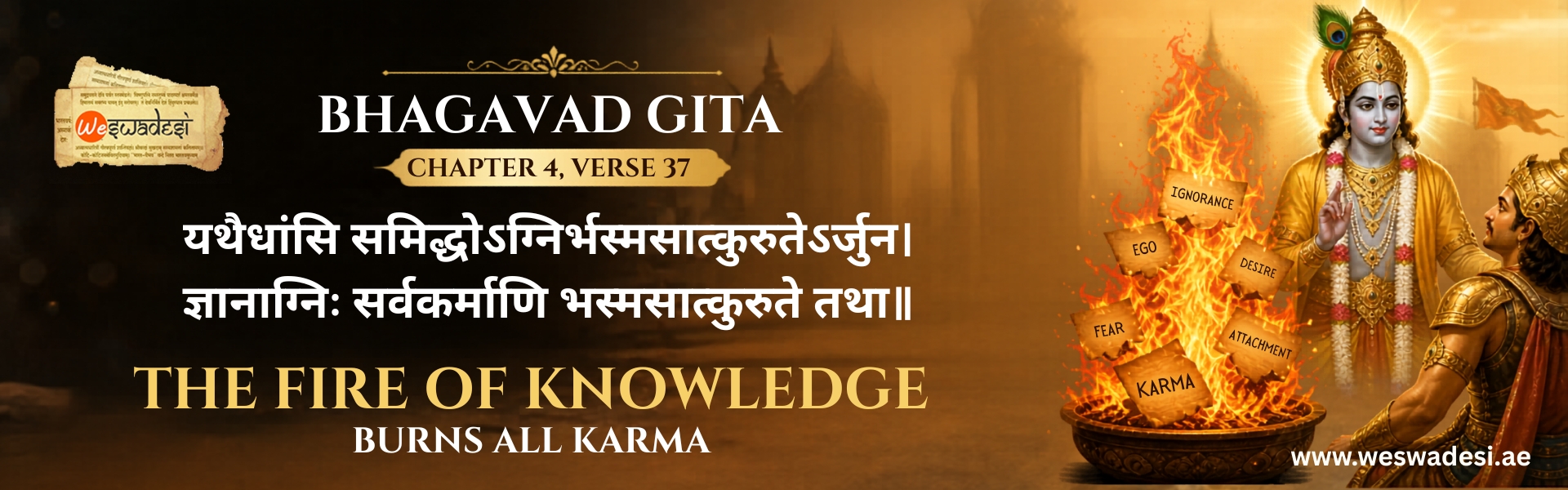
The Bhagavad Gita is one of the greatest spiritual scriptures ever revealed to humanity. In Chapter 4, known as Jnana Karma Sanyasa Yoga (The Yoga of Knowledge and Renunciation of Action), Lord Krishna explains the supreme importance of spiritual wisdom.
Verse 37 is among the most quoted verses because it beautifully compares knowledge to a blazing fire. This analogy helps seekers understand how enlightenment transforms life completely.
In today’s stressful and materialistic world, many people struggle with guilt, fear, anxiety, attachment, and the burden of past actions. This verse gives hope by teaching that spiritual wisdom can purify the mind and free a person from bondage.
Bhagavad Gita 4.37 Sanskrit Shloka
यथैधांसि समिद्धोऽग्निर्भस्मसात्कुरुतेऽर्जुन।
ज्ञानाग्निः सर्वकर्माणि भस्मसात्कुरुते तथा॥
Transliteration
Yathaidhāṁsi samiddho ’gnir bhasmasāt kurute ’rjuna
Jñānāgniḥ sarva-karmāṇi bhasmasāt kurute tathā
Bhagavad Gita Chapter 4 Verse 37 Meaning
English Translation
“O Arjuna, just as a blazing fire reduces firewood to ashes, similarly the fire of spiritual knowledge burns all karma into ashes.”
This profound verse from the Bhagavad Gita explains the transformative power of divine wisdom. Lord Krishna tells Arjuna that true spiritual knowledge has the ability to destroy accumulated karma, ignorance, confusion, and attachment, just as a powerful fire completely burns wood into ashes.
अर्थ:
हे अर्जुन, जिस प्रकार प्रज्वलित अग्नि लकड़ियों को भस्म कर देती है, उसी प्रकार ज्ञान रूपी अग्नि मनुष्य के सभी कर्मों और अज्ञान को जला देती है।
गहरा आध्यात्मिक संदेश:
भगवान श्रीकृष्ण यहाँ बताते हैं कि सच्चा ज्ञान केवल जानकारी नहीं है, बल्कि आत्मा की जागृति है। जब मनुष्य को अपने वास्तविक स्वरूप का ज्ञान हो जाता है, तब उसके भीतर का अंधकार समाप्त होने लगता है।
अज्ञान से पैदा होते हैं —
भय, क्रोध, मोह, अहंकार और दुख।
लेकिन जब ज्ञान की अग्नि प्रज्वलित होती है, तब यह सभी नकारात्मक भाव धीरे-धीरे समाप्त हो जाते हैं।
जिस प्रकार तेज अग्नि लकड़ी को राख बना देती है, उसी प्रकार आत्मज्ञान हमारे पुराने कर्मों के बंधन, मानसिक अशांति और भ्रम को समाप्त कर देता है।
यह श्लोक हमें सिखाता है कि:
सच्चा ज्ञान इंसान को भीतर से बदल देता है।
वह जीवन को केवल शरीर तक सीमित नहीं देखता, बल्कि आत्मा और परम सत्य को पहचानने लगता है।
“ज्ञान ही वह प्रकाश है जो जीवन के अंधकार को समाप्त करता है।”
Word-by-Word Meaning of Bhagavad Gita 4.37
- Yathā – Just as
- Edhāṁsi – Firewood
- Samiddhaḥ Agniḥ – A blazing fire
- Bhasmasāt Kurute – Turns into ashes
- Arjuna – O Arjuna
- Jñāna-Agniḥ – The fire of knowledge
- Sarva-Karmāṇi – All actions and karmas
- Bhasmasāt Kurute – Burns to ashes
- Tathā – Similarly
Context of Bhagavad Gita Chapter 4 Verse 37
To understand this verse deeply, we must understand the situation in which Lord Krishna speaks it.
Arjuna stood on the battlefield of Kurukshetra filled with confusion, grief, fear, and attachment. He was emotionally broken and unable to perform his duty. Krishna then began teaching him the eternal truths of life, karma, soul, and liberation.
In Chapter 4, Krishna explains:
- The divine origin of spiritual wisdom
- The importance of selfless action
- The role of knowledge in liberation
- How ignorance causes bondage
Verse 37 specifically highlights that knowledge is not ordinary information. Spiritual knowledge is transformative. It changes consciousness itself.
What Is the “Fire of Knowledge”?
The phrase “Jnana Agni” or “fire of knowledge” is deeply symbolic.
This fire represents:
- Self-realization
- Wisdom of the soul
- Understanding of truth
- Awareness of God
- Freedom from ignorance
- Spiritual awakening
Ignorance creates ego, attachment, desires, anger, fear, and suffering. When true knowledge arises, these impurities gradually disappear.
Just as fire destroys wood completely, spiritual wisdom destroys:
- Negative karma
- Illusion
- False identification with the body
- Ego-driven actions
- Mental suffering
How Knowledge Burns Karma
One of the most important teachings of this verse is that knowledge destroys karma.
What Is Karma?
Karma means action and the results of action. Every thought, word, and deed creates impressions that influence future experiences.
There are generally three types of karma:
1. Sanchita Karma
Accumulated karma from countless past lives.
2. Prarabdha Karma
The portion of karma currently being experienced in this life.
3. Agami Karma
Future karma created by present actions.
Krishna explains that spiritual wisdom burns accumulated karma because a realized person no longer acts with ego or attachment.
Does Knowledge Remove All Karma Instantly?
This is a common spiritual question.
The verse does not necessarily mean that all consequences disappear immediately. Rather, it means:
- Ignorance is destroyed
- The binding effect of karma ends
- The soul becomes free internally
- Actions no longer create bondage
A spiritually awakened person may still experience life situations, but internally they remain peaceful and detached.
Importance of Spiritual Knowledge in Daily Life
Bhagavad Gita 4.37 is not merely philosophical. It has practical relevance for everyday life.
1. Removes Fear
Knowledge of the soul removes fear of death and uncertainty.
2. Ends Confusion
Wisdom helps people make righteous decisions.
3. Brings Mental Peace
Understanding reality reduces anxiety and emotional suffering.
4. Purifies the Mind
Spiritual wisdom destroys jealousy, hatred, greed, and ego.
5. Helps in Self-Control
Knowledge creates awareness and discipline.
6. Gives Purpose to Life
People understand their true nature and higher mission.
The Symbolism of Fire in Hindu Philosophy
Fire has deep spiritual significance in Hinduism.
It symbolizes:
- Purification
- Transformation
- Divine energy
- Illumination
- Sacrifice
- Spiritual awakening
In Vedic rituals, fire is considered sacred because it transforms offerings into subtle energy.
Similarly, the fire of wisdom transforms human consciousness.
Difference Between Information and Wisdom
Modern society values information, but the Gita speaks about wisdom.
Information
- External
- Intellectual
- Temporary
- Can increase ego
Spiritual Wisdom
- Internal realization
- Permanent
- Liberating
- Removes ego
A person may have degrees and knowledge of the world yet remain unhappy. But spiritual wisdom brings true fulfillment.
Bhagavad Gita 4.37 and Inner Transformation
This verse teaches that true change happens from within.
External achievements cannot remove suffering permanently. Real transformation happens when consciousness changes.
A spiritually awakened person:
- Sees unity in all beings
- Acts selflessly
- Remains calm during difficulties
- Is free from hatred and fear
- Lives with compassion
Lessons from Bhagavad Gita Chapter 4 Verse 37
1. Seek True Knowledge
Not all knowledge leads to liberation. Seek wisdom that reveals truth.
2. Remove Ignorance
Most suffering comes from misunderstanding reality.
3. Practice Self-Reflection
Meditation and introspection help awaken spiritual awareness.
4. Let Go of Ego
Ego creates attachment and karma.
5. Live Consciously
Perform actions with awareness and selflessness.
Practical Ways to Develop Spiritual Knowledge
Daily Reading of Bhagavad Gita
Even one verse daily can gradually transform life.
Meditation
Meditation calms the mind and helps inner clarity emerge.
Association with Wise People
Good company influences thinking positively.
Selfless Service
Serving others purifies the heart.
Chanting God’s Name
Bhakti and devotion awaken spiritual consciousness.
Relevance of Bhagavad Gita 4.37 in Modern Life
Modern people often suffer from:
- Stress
- Depression
- Fear
- Relationship conflicts
- Material dissatisfaction
This verse offers timeless guidance.
The fire of spiritual wisdom helps people:
- Find inner peace
- Overcome emotional pain
- Develop clarity
- Live with purpose
- Free themselves from negativity
Bhagavad Gita 4.37 According to Great Saints
Adi Shankaracharya
He explained that knowledge destroys ignorance, which is the root cause of bondage.
Swami Vivekananda
He emphasized that divine knowledge awakens inner strength and freedom.
Mahatma Gandhi
Gandhi considered the Bhagavad Gita a guide for righteous living and inner purification.
Srila Prabhupada
He taught that Krishna consciousness burns sinful reactions and liberates the soul.
Connection Between Knowledge and Liberation
The ultimate goal of the Bhagavad Gita is liberation (moksha).
Liberation means freedom from:
- Ignorance
- Ego
- Birth and death cycle
- Attachment
- Suffering
According to Krishna, spiritual wisdom is the path to this freedom.
Why Krishna Uses the Example of Fire
Fire is one of the most powerful transforming forces in nature.
Wood entering fire cannot remain unchanged.
Similarly, a person who gains spiritual wisdom cannot continue living in ignorance.
Their thoughts, actions, and consciousness become purified.
Scientific Perspective on Spiritual Transformation
Modern psychology also supports the idea that awareness changes behavior.
When people gain deeper understanding:
- Emotional reactions reduce
- Decision-making improves
- Stress decreases
- Compassion increases
Spiritual practices rewire mental patterns positively.
Bhagavad Gita 4.37 and Karma Yoga
This verse is deeply connected with Karma Yoga.
Krishna does not ask Arjuna to abandon action. Instead, He teaches:
- Perform duty selflessly
- Act without attachment
- Dedicate actions to God
- Gain spiritual wisdom
Then actions no longer bind the soul.
How to Apply This Verse in Daily Life
During Difficulties
Remember that wisdom brings clarity and patience.
During Success
Stay humble and detached.
In Relationships
Act with compassion instead of ego.
At Work
Perform duties honestly without selfish attachment.
In Spiritual Practice
Focus on inner transformation rather than rituals alone.
Common Misunderstandings About This Verse
Misunderstanding 1: Knowledge Means Book Learning
The verse refers to spiritual realization, not academic education.
Misunderstanding 2: Karma Completely Vanishes Overnight
The deeper meaning is freedom from karmic bondage.
Misunderstanding 3: Action Is Unnecessary
Krishna repeatedly teaches righteous action combined with wisdom.
Inspirational Message from Bhagavad Gita 4.37
No matter how difficult the past may be, transformation is always possible.
The fire of wisdom can purify even the darkest ignorance.
This verse gives hope that through sincere spiritual practice, every person can rise above suffering and attain peace.
Conclusion
Bhagavad Gita Chapter 4 Verse 37 is a timeless spiritual teaching about the extraordinary power of knowledge.
Lord Krishna compares divine wisdom to a blazing fire that burns karma into ashes. This verse teaches that true spiritual understanding destroys ignorance, purifies the heart, and frees the soul from bondage.
In today’s world filled with stress, distraction, and confusion, this teaching remains deeply relevant. By cultivating self-awareness, devotion, meditation, and spiritual wisdom, people can experience inner transformation and lasting peace.
The message of this verse is simple yet profound:
True knowledge has the power to transform life completely.
FAQs on Bhagavad Gita Chapter 4 Verse 37
1. What is the meaning of Bhagavad Gita 4.37?
Bhagavad Gita 4.37 means that spiritual knowledge destroys karmic bondage just as blazing fire burns wood into ashes.
2. What is “Jnana Agni” in the Bhagavad Gita?
“Jnana Agni” means the fire of spiritual wisdom or divine knowledge that destroys ignorance and karma.
3. Does Bhagavad Gita 4.37 remove all karma?
The verse explains that spiritual realization destroys the binding effects of karma and frees the soul internally.
4. Why does Krishna compare knowledge to fire?
Fire symbolizes purification and transformation. Spiritual wisdom similarly purifies consciousness.
5. Which chapter contains Verse 37 in Bhagavad Gita?
Verse 37 is found in Chapter 4 of the Bhagavad Gita, called Jnana Karma Sanyasa Yoga.
6. What is the main teaching of Bhagavad Gita 4.37?
The main teaching is that divine wisdom destroys ignorance and liberates the soul from karmic bondage.
7. How can spiritual knowledge change life?
Spiritual wisdom brings peace, clarity, self-control, purpose, and freedom from fear and suffering.
8. What are the benefits of studying Bhagavad Gita daily?
Daily study improves mental peace, spiritual awareness, emotional strength, and moral understanding.
9. Is Bhagavad Gita 4.37 relevant today?
Yes, this verse is highly relevant in modern life because it helps people deal with stress, confusion, and emotional suffering.
10. How can one develop the fire of knowledge?
One can develop spiritual wisdom through meditation, devotion, selfless service, reading scriptures, and association with wise people.
