
- Your cart is empty
- Continue Shopping
Abhimanyu: The Young Warrior of Courage, Sacrifice & Dharma

Introduction
Among the many heroic figures of the Mahabharata, Abhimanyu stands out as a shining symbol of bravery, sacrifice, and unwavering commitment to dharma. Though his life was short, his impact was immense—especially in the context of the great war of Kurukshetra, which forms the backdrop of the Bhagavad Gita.
As the son of Arjuna and nephew of Krishna, Abhimanyu inherited not only royal blood but also divine strength, wisdom, and valor. His story is one of youthful heroism, tragic destiny, and eternal inspiration.
Key Facts About Abhimanyu
- Parents: Arjuna and Subhadra
- Spouse: Uttara (Princess of Matsya)
- Son: Parikshit
- Divine Origin: Incarnation of Varchas (son of Soma)
- Age at Death: 16 years
- Famous Event: Battle inside Chakravyuha
Birth and Divine Lineage
Abhimanyu was born during the exile of the Pandavas, a time filled with hardship but also preparation for future greatness. Raised in Dvārakā under the care of Krishna and Balarama, he grew up surrounded by divine influences and warrior traditions.
According to ancient belief, Abhimanyu was the incarnation of Varchas, the son of the Moon god Soma. His life on earth was destined to be short—just sixteen years—but filled with heroic achievements.
This divine origin highlights:
- His extraordinary courage
- His predetermined destiny
- His role in the cosmic balance of dharma
Training and Early Brilliance
From a very young age, Abhimanyu displayed remarkable intelligence and warrior skills. He was trained by some of the greatest warriors and teachers of the time:
- Arjuna (his father)
- Krishna (his divine guide)
- Balarama
- Pradyumna
The Chakravyuha Knowledge
One of the most fascinating aspects of Abhimanyu’s story is how he learned about the Chakravyuha formation.
While still in his mother Subhadra’s womb, he overheard Arjuna explaining how to enter the Chakravyuha—a complex and deadly military formation. However, before Arjuna could explain how to exit it, Subhadra fell asleep.
As a result:
- Abhimanyu knew how to enter the formation
- But did not know how to escape
This detail later becomes the most tragic turning point in his life.
Abhimanyu in the Kurukshetra War
The Kurukshetra war is the central conflict of the Mahabharata and the setting of the Bhagavad Gita. Though very young, Abhimanyu played a crucial role in the battle.
At just 16 years old, he:
- Fought alongside the Pandavas
- Displayed unmatched courage
- Defeated powerful warriors
He was often compared to his father Arjuna in skill and bravery.
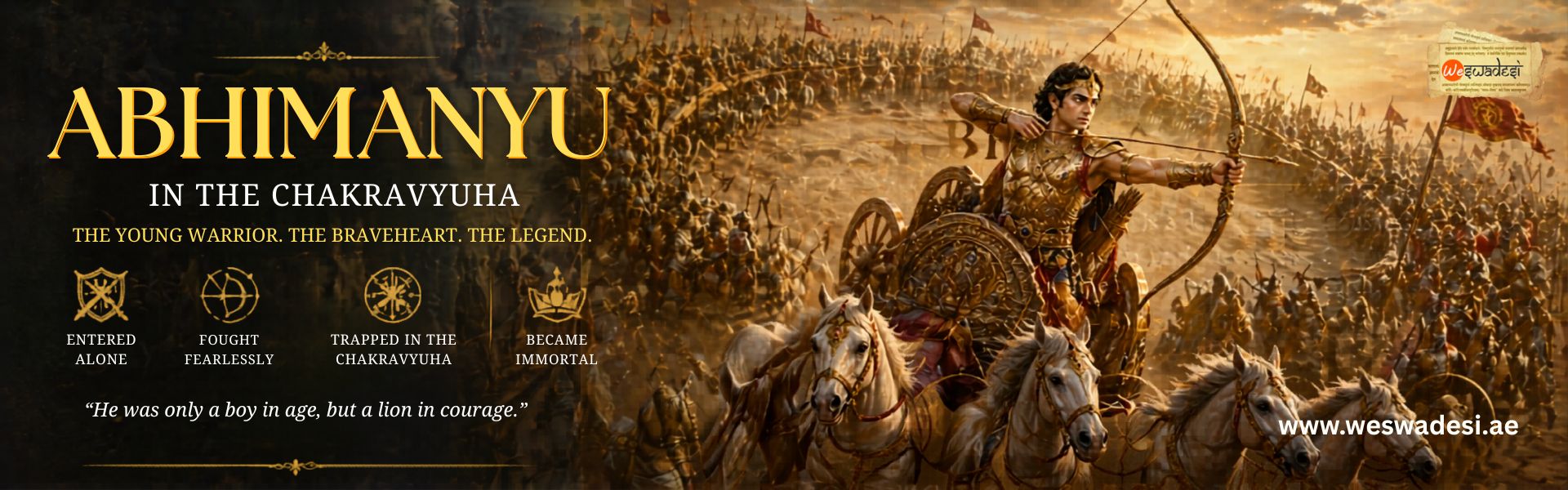
The 13th Day: Chakravyuha Battle
The most defining moment of Abhimanyu’s life came on the 13th day of the war.
The Situation
- Drona formed the Chakravyuha formation
- Arjuna was deliberately diverted away from the battlefield
- The Pandava army needed someone to break the formation
Abhimanyu stepped forward.
The Decision
Despite knowing he could not exit the formation, Abhimanyu chose to enter it.
This decision reflects:
- Ultimate bravery
- Commitment to duty
- Sacrifice for a greater cause
Inside the Chakravyuha
Once inside, Abhimanyu fought like a true warrior.
He:
- Defeated multiple Kaurava warriors
- Killed Lakshmana (son of Duryodhana)
- Defeated King Brihadbala
His fighting skills shocked even the greatest warriors on the opposing side.
The Unfair End
Realizing they could not defeat him individually, the Kaurava warriors broke the rules of warfare.
Abhimanyu was attacked simultaneously by:
- Drona
- Karna
- Kripa
- Ashwatthama
- Duryodhana’s forces
They:
- Destroyed his weapons
- Attacked him together
- Violated dharma
Eventually, Abhimanyu was killed in a brutal and unjust manner.
Symbolism of Abhimanyu
Abhimanyu represents some of the most powerful human qualities:
1. Courage Beyond Fear
He walked into a battle knowing he might not return.
2. Duty Above Life
He prioritized dharma over personal safety.
3. Youthful Strength
His story inspires young generations to act with confidence and integrity.
4. Sacrifice for Greater Good
He gave his life for the victory of righteousness.
Connection to Bhagavad Gita
Although Abhimanyu is not the speaker in the Bhagavad Gita, his life reflects its teachings.
1. Karma Yoga (Action Without Attachment)
Abhimanyu fought without fear of death or reward.
2. Dharma (Duty)
He fulfilled his responsibility despite personal risk.
3. Fearlessness
A core teaching of Krishna—fearlessness in the path of righteousness.
Abhimanyu’s actions demonstrate what Krishna teaches Arjuna:
Perform your duty without attachment to results.
Impact on Arjuna and the War
Abhimanyu’s death had a massive impact on the war.
When Arjuna learned about it:
- He was filled with grief and anger
- He vowed to kill Jayadratha before sunset the next day
This vow changed the momentum of the war and led to major victories for the Pandavas.
Legacy of Abhimanyu
Though his life was short, his legacy lived on.
Through Parikshit
His son Parikshit, born after his death, became the king of Hastinapura and continued the Pandava lineage.
In Culture
Abhimanyu’s story is remembered through:
- Temples and folklore
- Classical dance and drama
- Books and television
In Modern India
His name symbolizes:
- Bravery
- Sacrifice
- Patriotism
Even institutions like INS Abhimanyu honor his legacy.
Life Lessons from Abhimanyu
1. Age is Not a Barrier
Greatness can be achieved at any age.
2. Face Challenges Boldly
Even impossible situations deserve courage.
3. Stand for Dharma
Right action matters more than outcomes.
4. Be Mentally Strong
Strength is not just physical—it is mental and spiritual.
5. Leave a Legacy
Your actions define how you are remembered.
Relevance in Modern Life
In today’s world, Abhimanyu’s story is highly relatable.
Young people today face:
- Career pressure
- Tough decisions
- Competitive environments
Abhimanyu teaches:
- Take bold decisions
- Stay committed
- Never give up
For Devotees in UAE
For those living abroad, especially in the UAE, Abhimanyu’s story is a reminder of cultural roots and values.
You can:
- Read the Bhagavad Gita regularly
- Teach children about Abhimanyu
- Celebrate Indian heritage
Platforms like weswadesi.ae help maintain this connection through:
- Spiritual books
- Puja items
- Cultural products
Conclusion
Abhimanyu’s life may have been short, but it was filled with unmatched courage, sacrifice, and purpose. He remains one of the most inspiring figures in the Mahabharata and a living example of the teachings of the Bhagavad Gita.
His story reminds us:
- Courage is greater than fear
- Duty is greater than life
- Legacy is greater than time
Abhimanyu is not just a warrior—he is an eternal inspiration.
FAQs About Abhimanyu
1. Who was Abhimanyu?
Abhimanyu was the son of Arjuna and a young warrior in the Mahabharata, known for his bravery in the Kurukshetra war.
2. How did Abhimanyu learn Chakravyuha?
He learned it while in his mother’s womb by overhearing Arjuna, but only partially.
3. Why is Abhimanyu important in Bhagavad Gita context?
He represents the practical application of Gita teachings like duty, courage, and selfless action.
4. How did Abhimanyu die?
He was unfairly killed by multiple warriors inside the Chakravyuha after his weapons were destroyed.
5. What is Abhimanyu’s legacy?
He symbolizes youthful bravery and sacrifice, and his son Parikshit continued the Pandava lineage.
